


01. The Art of Narrative Architecture
Crafting a compelling “Moral Value Story” isn’t merely about presenting a lesson; it’s about embedding a profound ethical exploration within a dynamic narrative. The true power lies in “Narrative Psychology,” understanding how to build tension and shape character arcs that resonate with the chosen moral dilemma. To weave your theme seamlessly, begin by defining the core moral value – be it honesty, courage, empathy, justice, or sacrifice – and then construct a world and characters that fundamentally challenge or embody this value.
**Character Motivations and Internal Conflict:** Your protagonist’s journey must be anchored in their internal struggle. A moral value story thrives when the character is faced with a difficult choice that forces them to confront their deeply held beliefs or lack thereof. What are their existing values? What external pressures (societal norms, survival instincts, personal desires) conflict with the moral value you wish to explore? The tension isn’t just about external threats; it’s the unbearable weight of a decision. For instance, a character valuing honesty might be forced to lie to protect a loved one, creating a powerful internal rift. Show, don’t tell, this conflict. Instead of stating, “She felt torn,” describe her trembling hands, her averted gaze, the knot in her stomach, or the sleepless nights wrestling with her conscience. Their motivations should evolve, driven by the consequences of their choices, pushing them along a transformative character arc. This arc typically involves an initial state where the moral value is misunderstood, challenged, or ignored, leading to a crucible moment, and ultimately, a resolution where the character either embraces, redefines, or tragically fails to uphold the moral principle.
**World-Building as a Moral Crucible:** The setting is not merely a backdrop; it’s an active participant in the moral drama. A society built on a contradictory moral code can amplify the protagonist’s internal conflict. Perhaps the world rewards deceit, making honesty a dangerous virtue, or it punishes compassion, forcing characters to choose between self-preservation and empathy. Describe the oppressive air of a corrupt city, the stark beauty of a wilderness demanding brutal choices, or the stifling expectations of a rigid community. These environmental details should constantly reflect and challenge the story’s core moral value. Use sensory language – the stench of injustice, the bitter taste of betrayal, the chilling silence of abandonment – to immerse the reader in the moral landscape. Every element, from dialogue to description, should serve to illuminate the moral value, making it palpable and deeply felt rather than abstractly discussed.
**Character Motivations and Internal Conflict:** Your protagonist’s journey must be anchored in their internal struggle. A moral value story thrives when the character is faced with a difficult choice that forces them to confront their deeply held beliefs or lack thereof. What are their existing values? What external pressures (societal norms, survival instincts, personal desires) conflict with the moral value you wish to explore? The tension isn’t just about external threats; it’s the unbearable weight of a decision. For instance, a character valuing honesty might be forced to lie to protect a loved one, creating a powerful internal rift. Show, don’t tell, this conflict. Instead of stating, “She felt torn,” describe her trembling hands, her averted gaze, the knot in her stomach, or the sleepless nights wrestling with her conscience. Their motivations should evolve, driven by the consequences of their choices, pushing them along a transformative character arc. This arc typically involves an initial state where the moral value is misunderstood, challenged, or ignored, leading to a crucible moment, and ultimately, a resolution where the character either embraces, redefines, or tragically fails to uphold the moral principle.
**World-Building as a Moral Crucible:** The setting is not merely a backdrop; it’s an active participant in the moral drama. A society built on a contradictory moral code can amplify the protagonist’s internal conflict. Perhaps the world rewards deceit, making honesty a dangerous virtue, or it punishes compassion, forcing characters to choose between self-preservation and empathy. Describe the oppressive air of a corrupt city, the stark beauty of a wilderness demanding brutal choices, or the stifling expectations of a rigid community. These environmental details should constantly reflect and challenge the story’s core moral value. Use sensory language – the stench of injustice, the bitter taste of betrayal, the chilling silence of abandonment – to immerse the reader in the moral landscape. Every element, from dialogue to description, should serve to illuminate the moral value, making it palpable and deeply felt rather than abstractly discussed.
02. Story Metadata Specs
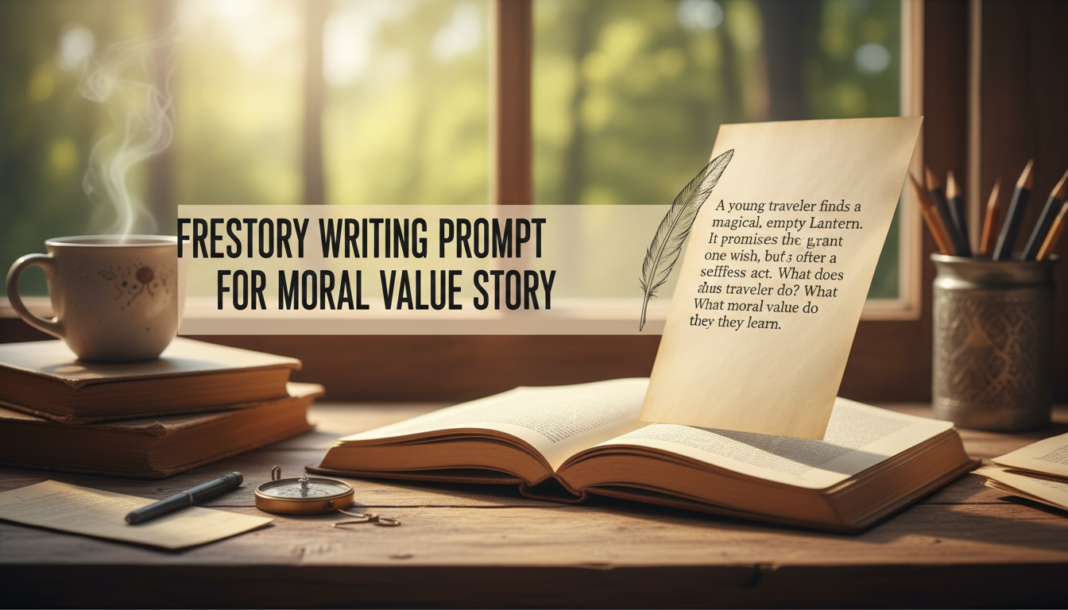
| Core Theme | Story Writing Prompt For Moral Value Story (Narrative Driven) |
| Pacing Style | Slow-Burn / High-Octane Transition |
| Emotional Anchor | Catharsis & Resolution |
03. The AI Author Toolkit
V1 • The Hero’s Journey Arc
“Act as an award-winning novelist. Write a story about Story Writing Prompt For Moral Value Story following the Hero’s Journey framework. Focus on the internal conflict of the protagonist, a vivid description of the setting, and a climactic resolution that ties back to the core theme. Use descriptive, sensory language.”
V2 • Suspense & Noir Thriller
“Create a high-tension suspense story involving Story Writing Prompt For Moral Value Story. Use short, punchy sentences to increase the pace. Start with a mysterious hook and include a major plot twist at the 75% mark. Maintain a dark, atmospheric tone throughout the narrative.”
V3 • Emotional Flash Fiction
“Write a 500-word emotional flash fiction piece centered around Story Writing Prompt For Moral Value Story. Focus on a single poignant moment between two characters. The dialogue should be subtle but heavy with subtext. End with a bittersweet realization that leaves the reader reflecting.”
04. Implementation & Genres
The versatility of a “Moral Value Story” allows it to transcend traditional genre boundaries, making it an incredibly powerful tool for audience engagement across various platforms. When considering different story formats, think about how the chosen moral value can be highlighted or challenged within specific genres.
In a **Fantasy** setting, tales of courage against overwhelming evil or the struggle for justice in a corrupt kingdom naturally weave in moral lessons. **Science Fiction** can explore ethical dilemmas through advanced technology or alien societies, questioning humanity’s values when confronted with the unknown. A **Historical Drama** can illuminate the moral choices individuals made during pivotal moments, offering timeless reflections. Even **Romance** can delve into themes of self-sacrifice, forgiveness, or commitment as central moral conflicts.
For content creators looking to build a loyal fanbase, these stories can be strategically deployed. A series of **blog posts** can unpack different facets of a single moral dilemma, perhaps through character perspectives or episodic short stories. An **ebook** offers a more substantial narrative arc, providing a complete journey for the reader. For **social media**, micro-fiction or poignant snippets from a larger story can serve as compelling teasers, sparking discussion and drawing readers into your world. A compelling “Moral Value Story” has the inherent ability to resonate deeply, fostering emotional connections that transform casual readers into dedicated followers, eager to explore the nuances of human experience through your unique narrative lens.
In a **Fantasy** setting, tales of courage against overwhelming evil or the struggle for justice in a corrupt kingdom naturally weave in moral lessons. **Science Fiction** can explore ethical dilemmas through advanced technology or alien societies, questioning humanity’s values when confronted with the unknown. A **Historical Drama** can illuminate the moral choices individuals made during pivotal moments, offering timeless reflections. Even **Romance** can delve into themes of self-sacrifice, forgiveness, or commitment as central moral conflicts.
For content creators looking to build a loyal fanbase, these stories can be strategically deployed. A series of **blog posts** can unpack different facets of a single moral dilemma, perhaps through character perspectives or episodic short stories. An **ebook** offers a more substantial narrative arc, providing a complete journey for the reader. For **social media**, micro-fiction or poignant snippets from a larger story can serve as compelling teasers, sparking discussion and drawing readers into your world. A compelling “Moral Value Story” has the inherent ability to resonate deeply, fostering emotional connections that transform casual readers into dedicated followers, eager to explore the nuances of human experience through your unique narrative lens.
Sample Opening Scene (Simulated)
The air in Oakhaven was thick with the scent of damp earth and unspoken truths, a perpetual mist clinging to ancient, gnarled trees. Elara traced the splintered edge of the market stall, her gaze drifting to the shimmering, illegal Lumiflora blossoms on Old Man Silas’s stand. Her family’s coughs, ragged and frequent, echoed in her mind. A single pouch of the flowers, traded for silence regarding Silas’s hidden dealings, could buy the medicine they desperately needed. But the Lumiflora withered the very soil it grew from, a slow poison. Her mother’s voice, a ghost of a whisper, echoed: “Integrity, child, is the last warmth in a cold world.” The cold seeped into Elara’s bones, a more profound chill than Oakhaven’s damp, as the weight of choice settled upon her shoulders.