


01. Editorial Vision
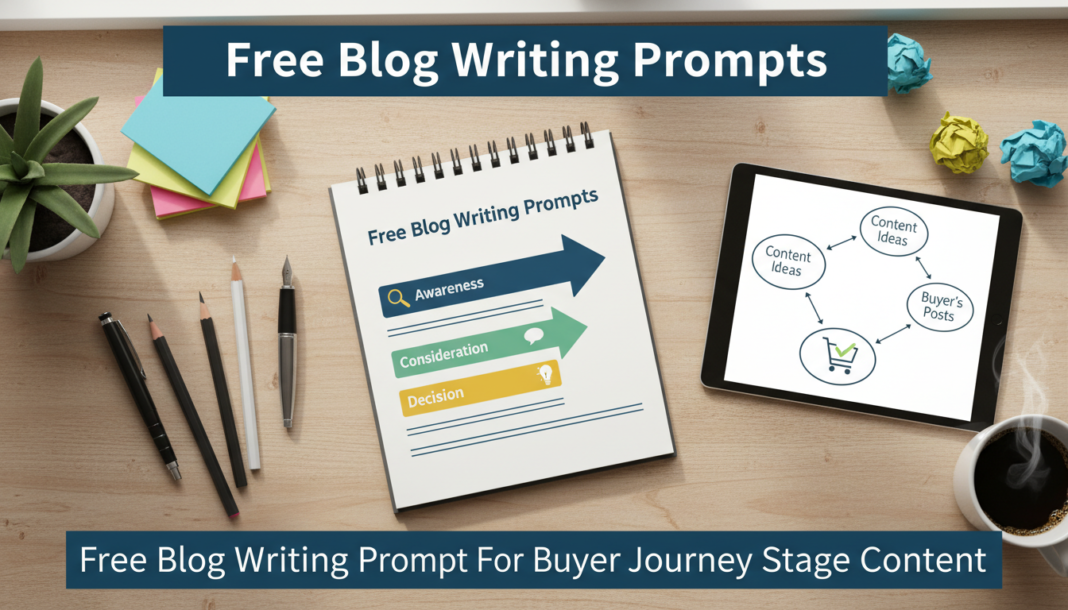
The strategic imperative behind “Blog Writing Prompt For Buyer Journey Stage Content” lies in its direct alignment with user intent and psychological progression towards a purchase. At its core, this content strategy acknowledges that a potential customer doesn’t engage with a brand with a singular mindset; rather, their needs, questions, and emotional state evolve significantly from initial problem recognition to final decision-making. Therefore, content must be meticulously tailored to address these shifting states across the Awareness, Consideration, and Decision stages.
In the **Awareness Stage**, individuals are experiencing a problem or need but may not yet know the solution or even that a solution exists. Their search intent is primarily informational and often problem-centric (e.g., "why is my internet slow," "how to boost productivity"). Content here must be empathetic, educational, and broad, focusing on symptoms, general solutions, and validation of their experience. The emotional hook is recognition and reassurance – "You're not alone, and here's a general understanding of what you're facing." To outrank competitors, E-E-A-T (Experience, Expertise, Authoritativeness, Trustworthiness) is paramount. Demonstrating genuine experience with the problem, deep expertise in the industry, authoritative sourcing, and trustworthy insights builds foundational credibility.
Moving to the **Consideration Stage**, the audience is now aware of their problem and actively researching potential solutions, including different methodologies, products, or services. Their search intent shifts to "commercial investigation" (e.g., "best project management software," "CRM vs. ERP"). Content needs to be more specific, compare options, discuss features, benefits, and address potential objections. The emotional hook here is empowerment and clarity – "Here are your options, clearly explained, to help you make an informed choice." Outranking competitors requires deep dives into solution categories, objective comparisons, and demonstrating authority through well-researched data, expert opinions, and even testimonials. This is where a brand can subtly introduce its unique value proposition without being overly promotional.
Finally, the **Decision Stage** audience has narrowed down their options and is ready to choose. Their intent is transactional or highly specific commercial (e.g., "Acme CRM pricing," "Acme CRM reviews," "buy Acme CRM now"). Content must directly address the specific product/service, provide compelling reasons to choose, offer proof points (case studies, demos, free trials), and clearly outline the next steps. The emotional hook is confidence and justification – "This is the right choice, and here's why you can trust us." E-E-A-T shines through here with concrete proof of success, transparent pricing, robust support, and clear calls to action. Authentic customer stories and detailed implementation guides demonstrate real-world experience and build trust.
The nuances of "Blog Writing Prompt For Buyer Journey Stage Content" demand a strategic integration of keyword research, intent mapping, and empathetic content creation. By consistently applying E-E-A-T principles at every stage, brands can not only capture relevant traffic but also nurture leads through a logical, emotionally resonant content journey, ultimately converting them into loyal customers.
02. Strategic Metadata
| Target Intent | Informational / Commercial Investigation |
| Readability Target | Flesch-Kincaid Grade 8 (Conversational) |
| Core Objective | Zero-Click Search Optimization |
03. The AI Prompt Library
V1 • SEO Pillar Post Architecture
You are an Elite SEO Content Strategist. Your task is to generate a comprehensive, E-E-A-T optimized pillar blog post outlining how to create content for each stage of the buyer’s journey (Awareness, Consideration, Decision). The post should target marketing professionals, content managers, and business owners.
Instructions:
- Title: Craft a compelling, keyword-rich title (H1) that promises comprehensive insights into buyer journey content strategy.
- Meta Description: Generate an enticing meta description (under 160 characters) focusing on value and actionable takeaways.
- Introduction: Hook the reader by highlighting the common pitfalls of undifferentiated content and the power of buyer journey alignment. Briefly introduce the three stages.
- Core Sections (H2s):
- Understanding the Buyer’s Journey: Define Awareness, Consideration, and Decision stages with distinct user psychology and search intent for each.
- Content for the Awareness Stage:
- Goal: Problem identification, education.
- Keywords: Broad, question-based, “what is,” “how to fix,” “symptoms of.”
- Content Formats: Blog posts, guides, infographics, research reports.
- Examples: “Signs You Need a [Product Category],” “The Ultimate Guide to [Problem Area].”
- E-E-A-T Focus: Empathy, broad expertise, data-backed insights.
- Content for the Consideration Stage:
- Goal: Solution exploration, comparison.
- Keywords: Solution-specific, comparison, “best X for Y,” “X vs Y,” “alternatives.”
- Content Formats: Whitepapers, case studies, comparison posts, webinars, expert interviews.
- Examples: “Top 5 [Solution Type] for Small Businesses,” “[Product A] vs. [Product B]: A Detailed Comparison.”
- E-E-A-T Focus: Deep expertise, authoritative comparisons, practical advice.
- Content for the Decision Stage:
- Goal: Purchase justification, conversion.
- Keywords: Branded, pricing, reviews, “buy X,” “demo X,” “X coupon.”
- Content Formats: Product pages, testimonials, case studies, pricing guides, FAQs, free trials.
- Examples: “Why Choose [Your Product/Service],” “Real Customer Stories: How [Product] Transformed [Client’s Business].”
- E-E-A-T Focus: Trustworthiness, real-world experience, clear value proposition.
- SEO Best Practices Integration: Include advice on keyword mapping, internal linking, external linking to authoritative sources, schema markup, and optimizing for featured snippets/zero-click.
- Measuring Success: Briefly discuss KPIs for each stage (e.g., Awareness: traffic, social shares; Consideration: downloads, time on page; Decision: conversions, lead quality).
- Conclusion: Summarize the importance of alignment and encourage consistent application.
- Tone: Authoritative, educational, practical, and engaging.
- Word Count: Aim for 1500-2000 words.
- Formatting: Use clear headings, bullet points, and bold text for readability.
V2 • Narrative Storytelling Method
You are a master storyteller and content marketer. Your goal is to write a compelling blog post using a narrative approach to illustrate the importance of tailoring content to the buyer’s journey. Tell a story from the perspective of a fictional business or customer, showing their progression through the Awareness, Consideration, and Decision stages, and how perfectly aligned content guides them.
Instructions:
- Narrative Arc: Create a fictional character (e.g., Sarah, a small business owner) or a company.
- Awareness Stage (Problem/Challenge): Introduce Sarah’s initial struggle or pain point. Describe her undirected search for answers, the frustration of irrelevant information, and how a truly empathetic, educational blog post (e.g., “5 Hidden Signs Your Workflow Is Failing”) helps her define her problem.
- Consideration Stage (Seeking Solutions): Sarah now knows her problem and is overwhelmed by options. Detail her research, comparing different approaches or tools. Show how a clear, comparative guide or a success story (e.g., “How [Competitor A] vs. [Your Solution] Stacks Up”) helps her evaluate and narrow down choices, highlighting key benefits relevant to her specific needs.
- Decision Stage (Choosing Wisely): Sarah is close to making a choice but has lingering doubts. Describe her final push for validation, perhaps checking reviews, case studies, or a detailed ‘Why Us’ page. Show how direct, trustworthy content (e.g., a free trial offer or an in-depth FAQ addressing common concerns) seals the deal, building confidence in her final purchase.
- Emotional Connection: Weave in Sarah’s emotions at each stage: frustration, confusion, hope, relief, confidence.
- Illustrate Impact: Clearly demonstrate how the specific, stage-aligned content eased her journey, saved her time, and built trust in the solution.
- Moral of the Story (Conclusion): Summarize the narrative by explicitly stating the strategic power of buyer journey content in guiding and converting customers.
- Tone: Empathetic, engaging, illustrative, and ultimately inspiring.
- Word Count: Aim for 1000-1200 words.
- Formatting: Use vivid descriptions, dialogue (optional), and clear transitions between stages.
V3 • High-Engagement Viral Listicle
As a content viralist and engagement expert, your mission is to create a high-engagement listicle blog post titled “10 Must-Have Content Ideas for Every Stage of Your Buyer’s Journey.” This listicle should be actionable, shareable, and packed with practical advice for marketers and business owners.
Instructions:
- Catchy Title (H1): Optimize for clicks and shares, focusing on “must-have” and “every stage.”
- Introduction: Briefly explain why generic content fails and tease the value of tailored content.
- Listicle Structure: Divide the 10 ideas logically across the three buyer journey stages (e.g., 3-4 for Awareness, 3-4 for Consideration, 2-3 for Decision).
- For each idea:
- Stage: Clearly indicate which buyer journey stage it addresses.
- Content Idea: Provide a specific, creative content type (e.g., “Interactive Quiz: What’s Your [Problem Area] IQ?”).
- Why It Works: Briefly explain the psychology or intent it addresses.
- Example Headline: Offer a compelling headline for that specific content idea.
- Key Tip: Add a quick, actionable piece of advice for implementation.
- For each idea:
- Awareness Stage Ideas: Focus on problem identification, education, and light engagement (e.g., infographics, “how-to” guides, problem symptom checklists).
- Consideration Stage Ideas: Focus on solution comparison, deep dives, and building trust (e.g., expert interviews, comparison guides, case study snippets).
- Decision Stage Ideas: Focus on conversion, overcoming objections, and urgency (e.g., interactive pricing calculators, limited-time offer landing pages, detailed FAQs with product specifics).
- Conclusion: Reiterate the power of strategic content and include a strong call to action for readers to implement these ideas and share the post.
- Tone: Energetic, inspiring, practical, and highly actionable.
- Word Count: Aim for 800-1000 words.
- Formatting: Use bolding, bullet points, and numbered lists extensively for scannability and impact. Incorporate emojis if appropriate for a viral tone.
04. Market Implementation
Implementing a content strategy focused on “Blog Writing Prompt For Buyer Journey Stage Content” delivers significant ROI by optimizing every touchpoint in the customer’s path to purchase. Businesses adopting this approach typically see improved lead quality, shorter sales cycles, and higher conversion rates. For instance, a B2B SaaS company generating content for the Awareness stage (e.g., “5 Common Challenges in Remote Team Management”) will attract top-of-funnel leads who are actively identifying a problem. While these leads aren’t ready to buy, their engagement with relevant, high-E-E-A-T content builds brand authority early on. This translates into increased organic traffic and a larger pool of potential customers.
As these leads progress to the Consideration stage, offering content like "Top 3 Remote Collaboration Tools Compared: Features & Pricing" directly addresses their evaluative intent. The ROI here is seen in lower bounce rates for these specific pages, higher time-on-page metrics, and increased content asset downloads (e.g., whitepapers, case studies) that qualify leads further down the funnel. Sales teams receive leads that are better informed and more aligned with the solution, reducing the time spent educating prospects and allowing them to focus on closing.
Finally, at the Decision stage, content such as "Why Our Remote Collaboration Tool Outperforms Competitors: A Case Study with [Client Name]" or "Get Started with a Free Trial of Our Platform" drives direct conversions. The measurable ROI includes a higher conversion rate from MQL to SQL, improved demo request rates, and ultimately, increased customer acquisition. By tailoring content, businesses can specifically address objections, build trust with targeted proof points, and guide prospects confidently towards a purchase. Furthermore, strategic internal linking within this buyer journey content ecosystem reinforces SEO authority, driving sustained organic visibility and compounding ROI over time. This approach ensures marketing spend is highly targeted and demonstrably contributes to the bottom line, moving beyond vanity metrics to real business impact.
Sample AI Generation (V1 Preview)
In today’s hyper-competitive digital landscape, a “one-size-fits-all” content strategy is a one-way ticket to obscurity. Your audience isn’t a monolithic entity; they are individuals with evolving needs, questions, and levels of readiness to purchase. The secret to transforming casual browsers into loyal customers lies in mastering the art of content alignment with the buyer’s journey. This comprehensive guide will equip marketing professionals, content managers, and business owners with the strategic insights and actionable tactics to craft compelling blog content for every stage – Awareness, Consideration, and Decision – ensuring your brand not only captures attention but also drives meaningful conversions by delivering the right message, to the right person, at precisely the right time.