


01. The Art of Narrative Architecture
The “Story Writing Prompt With Symbolism Strategy” demands more than surface-level plotting; it requires a deep dive into the human psyche, leveraging symbols to imbue narrative with profound resonance. Building tension and crafting compelling character arcs within this framework means symbols are not mere decorative flourishes, but vital arteries pumping meaning through the story’s heart.
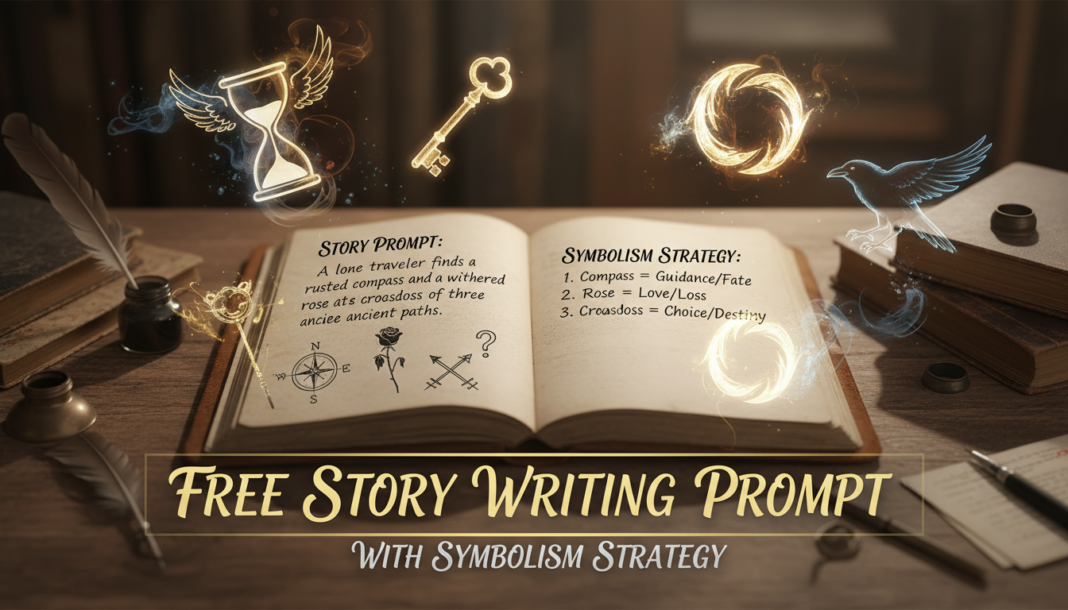
To weave symbolism effectively, begin by defining your core theme. What abstract concept – loss, redemption, freedom, deception – does your story explore? Once identified, brainstorm concrete objects, colors, actions, or natural phenomena that can subtly represent aspects of this theme. For instance, a wilting rose might symbolize fading love or forgotten beauty; a perpetually fog-shrouded town could embody confusion or hidden truths. These symbols should appear early, often as seemingly innocuous details, gradually accumulating weight and significance as the narrative unfolds.
Character motivations become intrinsically linked to their interaction with these symbols. Does your protagonist initially dismiss a recurring symbol, only to later understand its profound implications for their journey? Does an antagonist weaponize or corrupt a symbol of hope? The character arc isn’t just about external actions, but about their evolving perception and understanding of the symbolic language embedded in their world. A character might begin by chasing a literal treasure, only to discover the true “treasure” was symbolized by a seemingly insignificant token they discarded. This internal shift, spurred by symbolic realization, is the bedrock of a powerful arc.
Tension, too, benefits immensely from symbolism. Foreshadowing, when handled symbolically, feels less like a blatant hint and more like a creeping sense of unease. A recurring motif—a broken mirror, a distant siren, a specific bird’s cry—can subtly build dread, hinting at impending conflict or revelation without explicitly stating it. The ambiguity inherent in symbolism can keep readers guessing, creating a psychological tension that transcends mere plot points. The *meaning* behind events, hinted at through symbols, becomes the source of heightened stakes.
World-building is another arena where symbolism shines. Infuse your setting with symbolic architecture, local legends, or even a symbolic color palette. A crumbling monument might represent a society’s forgotten past; a river that flows upstream only in certain seasons could signify defiance against the natural order. This approach makes the world feel richer, more lived-in, and inherently meaningful.
Finally, the “Show, Don’t Tell” technique is paramount. Don’t tell the reader your character feels trapped; show them frantically polishing a rusted cage key, or show their reflection distorted in a grimy window, bars casting shadows across their face. Instead of stating a character is losing hope, depict them clutching a dead bird, its once vibrant feathers now dull and lifeless. The power of symbolism lies in its evocative nature, allowing the reader to *feel* and *interpret* rather than merely being informed. Through careful selection and consistent deployment, symbols can transform a simple prompt into a resonant, multi-layered narrative experience, deepening emotional impact and intellectual engagement.
To weave symbolism effectively, begin by defining your core theme. What abstract concept – loss, redemption, freedom, deception – does your story explore? Once identified, brainstorm concrete objects, colors, actions, or natural phenomena that can subtly represent aspects of this theme. For instance, a wilting rose might symbolize fading love or forgotten beauty; a perpetually fog-shrouded town could embody confusion or hidden truths. These symbols should appear early, often as seemingly innocuous details, gradually accumulating weight and significance as the narrative unfolds.
Character motivations become intrinsically linked to their interaction with these symbols. Does your protagonist initially dismiss a recurring symbol, only to later understand its profound implications for their journey? Does an antagonist weaponize or corrupt a symbol of hope? The character arc isn’t just about external actions, but about their evolving perception and understanding of the symbolic language embedded in their world. A character might begin by chasing a literal treasure, only to discover the true “treasure” was symbolized by a seemingly insignificant token they discarded. This internal shift, spurred by symbolic realization, is the bedrock of a powerful arc.
Tension, too, benefits immensely from symbolism. Foreshadowing, when handled symbolically, feels less like a blatant hint and more like a creeping sense of unease. A recurring motif—a broken mirror, a distant siren, a specific bird’s cry—can subtly build dread, hinting at impending conflict or revelation without explicitly stating it. The ambiguity inherent in symbolism can keep readers guessing, creating a psychological tension that transcends mere plot points. The *meaning* behind events, hinted at through symbols, becomes the source of heightened stakes.
World-building is another arena where symbolism shines. Infuse your setting with symbolic architecture, local legends, or even a symbolic color palette. A crumbling monument might represent a society’s forgotten past; a river that flows upstream only in certain seasons could signify defiance against the natural order. This approach makes the world feel richer, more lived-in, and inherently meaningful.
Finally, the “Show, Don’t Tell” technique is paramount. Don’t tell the reader your character feels trapped; show them frantically polishing a rusted cage key, or show their reflection distorted in a grimy window, bars casting shadows across their face. Instead of stating a character is losing hope, depict them clutching a dead bird, its once vibrant feathers now dull and lifeless. The power of symbolism lies in its evocative nature, allowing the reader to *feel* and *interpret* rather than merely being informed. Through careful selection and consistent deployment, symbols can transform a simple prompt into a resonant, multi-layered narrative experience, deepening emotional impact and intellectual engagement.
02. Story Metadata Specs
| Core Theme | Story Writing Prompt With Symbolism Strategy (Narrative Driven) |
| Pacing Style | Slow-Burn / High-Octane Transition |
| Emotional Anchor | Catharsis & Resolution |
03. The AI Author Toolkit
V1 • The Hero’s Journey Arc
“Act as an award-winning novelist. Write a story about Story Writing Prompt With Symbolism Strategy following the Hero’s Journey framework. Focus on the internal conflict of the protagonist, a vivid description of the setting, and a climactic resolution that ties back to the core theme. Use descriptive, sensory language.”
V2 • Suspense & Noir Thriller
“Create a high-tension suspense story involving Story Writing Prompt With Symbolism Strategy. Use short, punchy sentences to increase the pace. Start with a mysterious hook and include a major plot twist at the 75% mark. Maintain a dark, atmospheric tone throughout the narrative.”
V3 • Emotional Flash Fiction
“Write a 500-word emotional flash fiction piece centered around Story Writing Prompt With Symbolism Strategy. Focus on a single poignant moment between two characters. The dialogue should be subtle but heavy with subtext. End with a bittersweet realization that leaves the reader reflecting.”
04. Implementation & Genres
Harnessing the “Story Writing Prompt With Symbolism Strategy” offers remarkable versatility across various publishing formats, allowing authors to cultivate a dedicated readership and maximize content reach. Different platforms lend themselves to distinct storytelling approaches, each effectively utilizing symbolic narratives to engage specific audiences.
For **blogs**, this strategy can manifest as a series of interconnected short stories or flash fiction pieces. Each post might explore a single symbolic element or a moment of symbolic realization, fostering immediate engagement. A blog could feature “The Raven’s Message” or “The Willow’s Whisper,” where brief narratives revolve around specific symbols that hint at larger themes. This episodic format builds anticipation, encouraging readers to return for the next installment and fostering a loyal community through comments and discussion, as readers interpret and debate the symbols’ meanings.
**Ebooks** provide the canvas for more expansive and intricate symbolic narratives. Here, authors can develop complex character arcs where symbolic motifs evolve alongside the protagonist’s journey. A full-length novel allows for deep world-building imbued with layers of symbolism—ancient relics, cultural rituals, or even character names holding hidden meanings. An ebook series could delve into an overarching symbolic mythology, with each volume peeling back another layer of meaning. This format appeals to readers seeking immersive, detailed stories and offers a clear monetization path.
For **social media series**, the “Story Writing Prompt With Symbolism Strategy” requires conciseness and strong visual appeal. Micro-fiction coupled with striking imagery that explicitly features or subtly alludes to key symbols can be highly effective. Think of a series of Instagram posts, each featuring a short, evocative paragraph and a photo of a solitary lighthouse (symbolizing guidance or isolation), or a broken pocket watch (representing lost time or shattered promises). The fragmented nature of social media can be used to create a compelling mystery, with each post acting as a symbolic clue that invites followers to piece together the larger narrative. This method is excellent for building buzz, engaging younger demographics, and cross-promoting longer works.
By strategically adapting the “Story Writing Prompt With Symbolism Strategy” to suit these diverse formats, authors can not only create compelling stories but also establish a robust content ecosystem that nurtures a loyal fanbase, turning casual readers into ardent followers of their unique symbolic storytelling voice.
For **blogs**, this strategy can manifest as a series of interconnected short stories or flash fiction pieces. Each post might explore a single symbolic element or a moment of symbolic realization, fostering immediate engagement. A blog could feature “The Raven’s Message” or “The Willow’s Whisper,” where brief narratives revolve around specific symbols that hint at larger themes. This episodic format builds anticipation, encouraging readers to return for the next installment and fostering a loyal community through comments and discussion, as readers interpret and debate the symbols’ meanings.
**Ebooks** provide the canvas for more expansive and intricate symbolic narratives. Here, authors can develop complex character arcs where symbolic motifs evolve alongside the protagonist’s journey. A full-length novel allows for deep world-building imbued with layers of symbolism—ancient relics, cultural rituals, or even character names holding hidden meanings. An ebook series could delve into an overarching symbolic mythology, with each volume peeling back another layer of meaning. This format appeals to readers seeking immersive, detailed stories and offers a clear monetization path.
For **social media series**, the “Story Writing Prompt With Symbolism Strategy” requires conciseness and strong visual appeal. Micro-fiction coupled with striking imagery that explicitly features or subtly alludes to key symbols can be highly effective. Think of a series of Instagram posts, each featuring a short, evocative paragraph and a photo of a solitary lighthouse (symbolizing guidance or isolation), or a broken pocket watch (representing lost time or shattered promises). The fragmented nature of social media can be used to create a compelling mystery, with each post acting as a symbolic clue that invites followers to piece together the larger narrative. This method is excellent for building buzz, engaging younger demographics, and cross-promoting longer works.
By strategically adapting the “Story Writing Prompt With Symbolism Strategy” to suit these diverse formats, authors can not only create compelling stories but also establish a robust content ecosystem that nurtures a loyal fanbase, turning casual readers into ardent followers of their unique symbolic storytelling voice.
Sample Opening Scene (Simulated)
The wind, a ghost with icy fingers, rattled the single, grimy pane of Elias’s attic window. Below, the city sprawled in a permanent twilight, its brick labyrinth exhaling the damp scent of decay. But it wasn’t the city’s melancholy that gnawed at Elias; it was the polished, bronze compass clutched in his trembling hand. It was old, impossibly so, inherited from a grandmother he barely remembered, and its needle, always before true, now spun wildly, a frantic, lost thing. He ran a thumb over the tarnished inscription: *“North is not always true, boy. Listen to the pull.”* What pull? He’d dismissed it as sentimental nonsense, a relic. Now, its erratic dance mirrored the chaos in his own heart, a yearning for direction he couldn’t name, a path forward he no longer trusted. A solitary, faded feather, shed from an unknown bird, lay impaled on the compass’s glass, a tiny, defiant spear against the frantic spin.