


01. The Art of Narrative Architecture
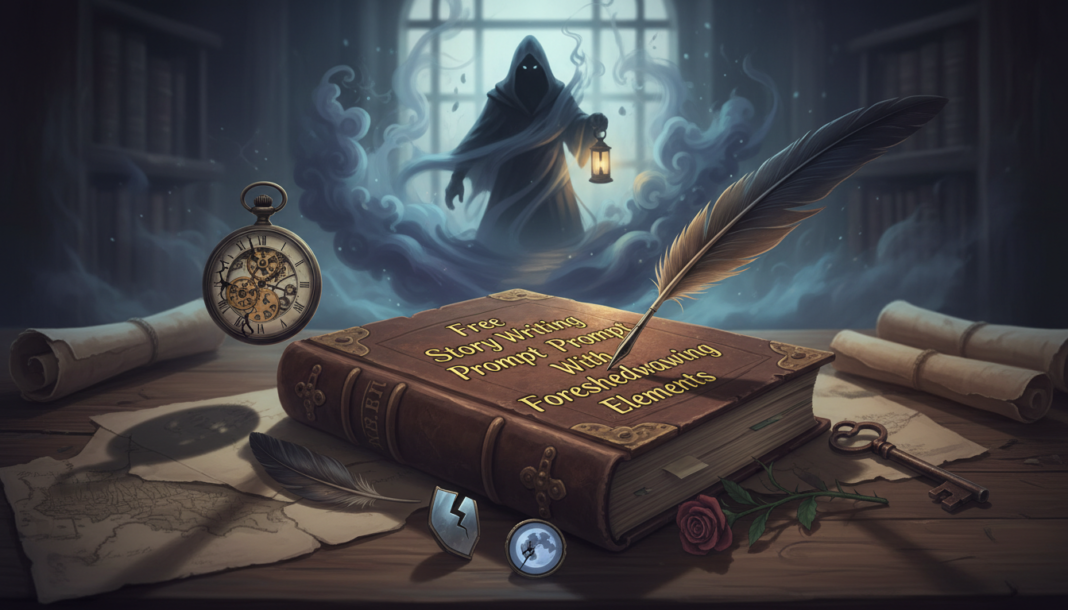
Building tension through foreshadowing is an art of planting seeds. Instead of overtly declaring danger, we introduce an unsettling atmosphere through sensory details: the persistent chill in a seemingly warm room, the scent of decay where none should be, the recurring, discordant melody heard only by the protagonist. These elements don’t just describe a setting; they whisper of future conflict, creating a psychological unease that keeps the reader perpetually on edge. The character’s arc becomes intrinsically linked to these premonitions. A protagonist initially dismissive of an old legend might gradually become obsessed as the very events foretold begin to manifest around them. Their internal conflict—between skepticism and a growing, terrifying belief—is amplified by the mounting evidence of the foreshadowed events, driving their motivations.
Character motivations are deepened when intertwined with these ominous threads. Perhaps a character’s fierce loyalty stems from a past trauma, subtly hinted at, which makes them wary of a particular type of danger now emerging. Or a villain’s actions might be the long-awaited culmination of a prophecy they’ve painstakingly sought to fulfill, their motives rooted in a worldview revealed piece by insidious piece. Foreshadowing allows us to “show, don’t tell” the impending doom or triumph. Instead of stating “the ancient curse was stirring,” we show the village well turning brackish, the livestock falling ill, the elders muttering about forgotten rites. The reader connects these dots, participating actively in the narrative’s tension-building, making the ultimate revelation more impactful.
World-building, too, can be a powerful vehicle for foreshadowing. An ancient ruin isn’t just a picturesque backdrop; its crumbling statues might depict a forgotten war, its cryptic inscriptions might hint at a dormant power, its very silence might scream of a terrible past destined to repeat itself. These environmental clues don’t merely expand the world; they act as silent narrators, offering glimpses of what lies ahead without disrupting the immediate action. The key is subtlety, avoiding heavy-handed exposition that breaks immersion. The best foreshadowing feels like a natural part of the world, noticed subconsciously until its significance snaps into sharp focus. By carefully layering these narrative elements, from the deepest character fears to the broadest strokes of a fantastical landscape, a story evolves not just linearly, but with a resonant, preordained momentum that captivates and satisfies.
02. Story Metadata Specs
| Core Theme | Story Writing Prompt With Foreshadowing Elements (Narrative Driven) |
| Pacing Style | Slow-Burn / High-Octane Transition |
| Emotional Anchor | Catharsis & Resolution |
03. The AI Author Toolkit
04. Implementation & Genres
In Fantasy, foreshadowing often manifests as prophecies, ancient omens, or lingering curses. A saga spanning multiple novels or an episodic blog series can utilize these long-game hints to build immense anticipation. An ancient scroll discovered in one book might hint at a future threat resolved chapters later or even in a subsequent installment, encouraging readers to eagerly follow the series. For an ebook, the depth allows for intricate, layered foreshadowing that rewards rereading.
Mystery and Thriller genres thrive on foreshadowing. Here, it’s about subtle clues – a character’s nervous habit, an out-of-place object, a cryptic phone call – that escalate suspicion. A detective series on a blog could release “case files” with seemingly innocuous details that only make sense much later, fostering a dedicated, puzzle-solving fanbase. Short, punchy social media posts could present a “clue of the day,” a fragment of dialogue or an image, hinting at a larger conspiracy to be unveiled in a linked novella.
Science Fiction might employ foreshadowing through scientific anomalies, dystopian warnings, or fragmented transmissions from the future. A serialized story posted weekly could gradually unveil the true nature of an alien signal, building a committed audience anticipating each new revelation. For an interactive digital story, choices made by the reader could trigger pre-planted foreshadowing elements, personalizing the narrative tension.
For Literary Fiction, foreshadowing is often psychological, subtle hints at character flaws, impending emotional shifts, or societal decay. A poignant reflection in a character’s diary (blog series) or a recurring motif in a novel can quietly prepare the reader for a dramatic turning point. Even romance can benefit from early hints of incompatibility or an underlying tension that foreshadows a future conflict or ultimate separation, making the emotional journey more profound.
By consciously adapting the nature and frequency of foreshadowing to the specific genre and publishing format, authors can not only enhance narrative depth but also strategically cultivate a loyal fanbase across platforms. Each hint, no matter how small, becomes a breadcrumb leading readers deeper into the story world, ensuring their return.
Sample Opening Scene (Simulated)