



01. Editorial Vision
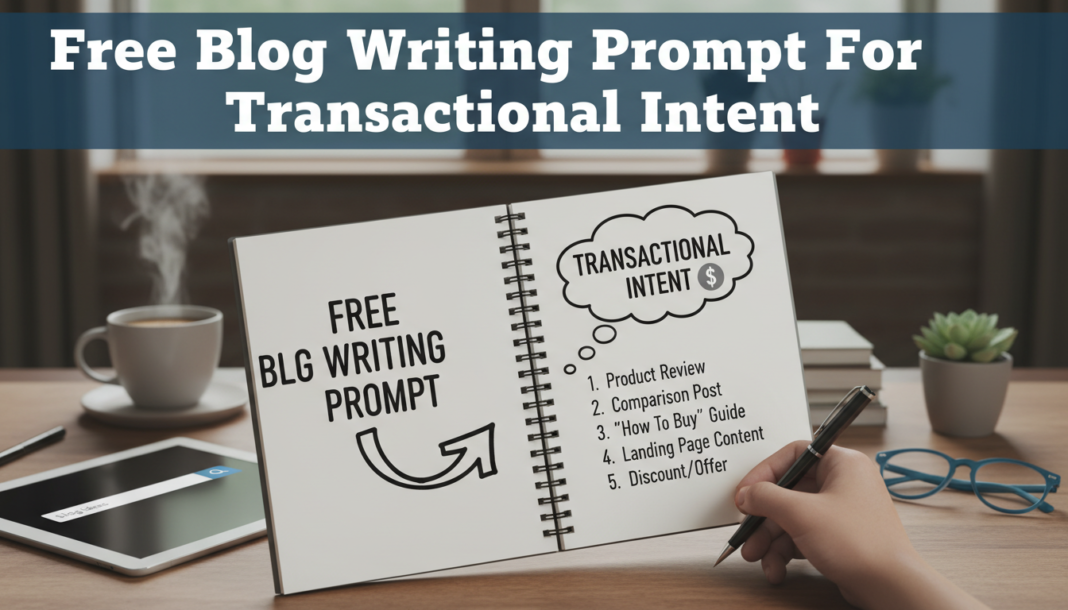
When crafting content for transactional intent, we’re targeting users who are beyond the discovery phase. They aren’t merely seeking information; they’re actively considering a purchase, a sign-up, a download, or a commitment. This audience stands at the precipice of conversion, their search queries often peppered with terms like “buy,” “best,” “review,” “price,” “compare,” “sign up,” “download,” or “[product/service name] vs. [competitor].” Understanding this psychological state is paramount. These individuals are typically pragmatic, goal-oriented, and often experiencing a specific pain point they wish to resolve *now*. Their decision-making process is driven by factors like perceived value, trust, immediate applicability, and a clear path to resolution. They are looking for reassurance, detailed comparisons, social proof, and compelling reasons to choose *your* solution over competitors.
Outranking competitors in this highly competitive space demands more than just keyword stuffing; it requires a superior application of E-E-A-T (Experience, Expertise, Authoritativeness, Trustworthiness).
Outranking competitors in this highly competitive space demands more than just keyword stuffing; it requires a superior application of E-E-A-T (Experience, Expertise, Authoritativeness, Trustworthiness).
- Experience: Demonstrate first-hand knowledge of the product or service. This means featuring case studies, user testimonials, practical tutorials, or even personal anecdotes of how the solution addressed a real-world problem. Show, don’t just tell, how your offering works in practice.
- Expertise: Provide in-depth, nuanced understanding. This goes beyond basic features to explain *why* certain features matter, *how* they solve specific problems, and *who* benefits most. Detailed comparisons, technical specifications explained simply, and unique insights into industry trends establish deep knowledge.
- Authoritativeness: Build credibility through external validation. This can include mentions from reputable industry sources, backlinks from authoritative sites, certifications, awards, or clearly attributed quotes from industry leaders. The author’s qualifications should also be transparent and relevant.
- Trustworthiness: This is perhaps the most critical for transactional intent. Be transparent about pricing, terms, and conditions. Provide clear guarantees or return policies. Include strong calls to action (CTAs) that are benefit-driven and unambiguous. Feature customer reviews prominently and offer accessible support information. Acknowledge potential downsides or limitations honestly, framing them against the product’s strengths.
The emotional hook for transactional intent articles isn’t about deep, abstract storytelling (though narrative can support it); it’s about connecting the user’s immediate need with your definitive solution. It’s the relief of finding the “best” option, the confidence of making an informed decision, the satisfaction of solving a persistent problem, or the excitement of achieving a desired outcome. Use language that speaks directly to their urgency and desire for certainty, transforming their “want” into a “need” for your offering.
02. Strategic Metadata
| Target Intent | Commercial Investigation / Transactional |
| Readability Target | Flesch-Kincaid Grade 8 (Conversational yet Authoritative) |
| Core Objective | Direct Conversion (Sales, Leads, Sign-ups) |
03. The AI Prompt Library
V1 • SEO Pillar Post Architecture
You are an Elite SEO Content Strategist. Draft a comprehensive pillar blog post outline for a transactional intent keyword: “[PRIMARY KEYWORD, e.g., ‘best CRM for small business’]”. The goal is to outrank competitors by establishing E-E-A-T and driving direct conversions. Include:
1. **Meta Title & Description:** Highly optimized, persuasive, and keyword-rich.
2. **Introduction:** Hook the reader immediately, acknowledge their pain point/goal, and promise a definitive solution.
3. **H2 Sections:** Strategic headings covering all aspects a high-intent user would consider (e.g., “Why [Product/Service] Matters for [Audience],” “Key Features to Look For,” “Top [Number] [Product/Service] Options Reviewed,” “Pricing & ROI,” “Integration Capabilities,” “Who Is This For?”).
4. **Comparison Table:** A detailed feature-by-feature comparison of top options.
5. **FAQs:** Address common pre-purchase questions.
6. **E-E-A-T Signals:** Suggest specific ways to weave in experience (case studies, user stories), expertise (deep dives into features), authoritativeness (expert quotes, industry data), and trustworthiness (transparent pros/cons, guarantees).
7. **Calls to Action (CTAs):** Varied and strategically placed for different stages of decision-making (e.g., “Get a Demo,” “Start Free Trial,” “Compare Plans”).
8. **Internal & External Links:** Recommendations for enhancing topical authority and trust.
9. **Schema Markup Recommendations:** Specific types (e.g., Product, Review, How-To) to consider.
Focus on compelling, actionable content that guides the user directly to a decision.
1. **Meta Title & Description:** Highly optimized, persuasive, and keyword-rich.
2. **Introduction:** Hook the reader immediately, acknowledge their pain point/goal, and promise a definitive solution.
3. **H2 Sections:** Strategic headings covering all aspects a high-intent user would consider (e.g., “Why [Product/Service] Matters for [Audience],” “Key Features to Look For,” “Top [Number] [Product/Service] Options Reviewed,” “Pricing & ROI,” “Integration Capabilities,” “Who Is This For?”).
4. **Comparison Table:** A detailed feature-by-feature comparison of top options.
5. **FAQs:** Address common pre-purchase questions.
6. **E-E-A-T Signals:** Suggest specific ways to weave in experience (case studies, user stories), expertise (deep dives into features), authoritativeness (expert quotes, industry data), and trustworthiness (transparent pros/cons, guarantees).
7. **Calls to Action (CTAs):** Varied and strategically placed for different stages of decision-making (e.g., “Get a Demo,” “Start Free Trial,” “Compare Plans”).
8. **Internal & External Links:** Recommendations for enhancing topical authority and trust.
9. **Schema Markup Recommendations:** Specific types (e.g., Product, Review, How-To) to consider.
Focus on compelling, actionable content that guides the user directly to a decision.
V2 • Narrative Storytelling Method
As a master storyteller and conversion copywriter, craft a compelling narrative-driven blog post framework for a transactional intent keyword: “[PRIMARY KEYWORD, e.g., ‘solve customer churn with AI’].” Focus on a relatable persona’s journey from problem to solution, culminating in a strong call to action. Include:
1. **Engaging Title:** Hooks the reader emotionally and highlights the transformation.
2. **Hero/Persona Introduction:** Introduce a relatable character (or business scenario) facing the specific problem. Detail their struggles, frustrations, and the impact of the problem.
3. **Inciting Incident/Discovery:** How did they realize “[Your Solution]” was the answer? Perhaps they tried other methods that failed.
4. **The Journey with the Solution:** Describe how “[Your Solution]” was implemented and how it specifically alleviated their pain points. Use vivid, benefit-driven language.
5. **The Transformation/Resolution:** Show the “after” picture – the positive outcomes, achieved goals, and overall success attributed to “[Your Solution]”. Quantify results where possible.
6. **Addressing Skepticism:** Briefly tackle common objections or concerns a transactional user might have, and how the narrative implicitly or explicitly overcomes them.
7. **Strong, Emotional CTA:** Guide the reader to take the same transformative step, framed as an opportunity for their own success story.
The narrative should resonate deeply, making the reader envision themselves achieving similar results.
1. **Engaging Title:** Hooks the reader emotionally and highlights the transformation.
2. **Hero/Persona Introduction:** Introduce a relatable character (or business scenario) facing the specific problem. Detail their struggles, frustrations, and the impact of the problem.
3. **Inciting Incident/Discovery:** How did they realize “[Your Solution]” was the answer? Perhaps they tried other methods that failed.
4. **The Journey with the Solution:** Describe how “[Your Solution]” was implemented and how it specifically alleviated their pain points. Use vivid, benefit-driven language.
5. **The Transformation/Resolution:** Show the “after” picture – the positive outcomes, achieved goals, and overall success attributed to “[Your Solution]”. Quantify results where possible.
6. **Addressing Skepticism:** Briefly tackle common objections or concerns a transactional user might have, and how the narrative implicitly or explicitly overcomes them.
7. **Strong, Emotional CTA:** Guide the reader to take the same transformative step, framed as an opportunity for their own success story.
The narrative should resonate deeply, making the reader envision themselves achieving similar results.
V3 • High-Engagement Viral Listicle
Generate a high-engagement, viral-potential listicle for a transactional intent keyword: “[PRIMARY KEYWORD, e.g., ‘Top 7 tools for remote team collaboration’]”. The content should be highly scannable, visually appealing, and directly motivate purchase/action. Provide:
1. **Catchy, Benefit-Driven Title:** Maximize click-through rates and set clear expectations.
2. **Intriguing Introduction:** Quickly hook the reader by addressing their need for a solution and promising actionable insights.
3. **Numbered List Items:** For each item (e.g., a specific tool, feature, or tip), include:
* A clear, concise heading.
* A brief, benefit-oriented description highlighting its unique selling proposition (USP) relevant to the transactional intent.
* A mini “Pro/Con” or “Why it’s perfect for X” summary.
* A subtle yet direct call to action (e.g., “Try [Tool Name] Free,” “Learn More About This Feature”).
4. **Visual Suggestions:** Recommend where to integrate product screenshots, comparison graphics, or short video snippets to break up text and enhance engagement.
5. **Concluding Recommendation/CTA:** A strong summary encouraging immediate action, perhaps with a final benefit statement or a limited-time offer.
6. **Shareability Elements:** Suggest ways to make the content easily shareable (e.g., “Pin this list!”, “Tweet your favorite tool”).
Each point must directly serve the transactional goal without feeling overly salesy.
1. **Catchy, Benefit-Driven Title:** Maximize click-through rates and set clear expectations.
2. **Intriguing Introduction:** Quickly hook the reader by addressing their need for a solution and promising actionable insights.
3. **Numbered List Items:** For each item (e.g., a specific tool, feature, or tip), include:
* A clear, concise heading.
* A brief, benefit-oriented description highlighting its unique selling proposition (USP) relevant to the transactional intent.
* A mini “Pro/Con” or “Why it’s perfect for X” summary.
* A subtle yet direct call to action (e.g., “Try [Tool Name] Free,” “Learn More About This Feature”).
4. **Visual Suggestions:** Recommend where to integrate product screenshots, comparison graphics, or short video snippets to break up text and enhance engagement.
5. **Concluding Recommendation/CTA:** A strong summary encouraging immediate action, perhaps with a final benefit statement or a limited-time offer.
6. **Shareability Elements:** Suggest ways to make the content easily shareable (e.g., “Pin this list!”, “Tweet your favorite tool”).
Each point must directly serve the transactional goal without feeling overly salesy.
04. Market Implementation
Implementing a robust content strategy for transactional intent directly translates into significant ROI across various business metrics. Firstly, the most apparent benefit is an **increase in direct conversions**. By precisely targeting users at the bottom of the funnel, these blog posts act as highly effective sales enablement tools, guiding prospects through their final decision-making stages. This means more sales, sign-ups, demo requests, or lead submissions, directly impacting revenue.
Secondly, optimizing for transactional intent can **drastically reduce Customer Acquisition Cost (CAC)**. Organic traffic driven by high-ranking transactional content is inherently more cost-effective than paid advertising for high-intent keywords. As these users are already primed to convert, the organic channel delivers warm leads directly to your offering, minimizing advertising spend while maximizing conversion efficiency.
Furthermore, exceptional transactional content **enhances customer lifetime value (CLV)** by building immediate trust and satisfaction. When users find exactly what they need, presented clearly and authoritatively, their initial experience with your brand is positive, fostering loyalty and increasing the likelihood of repeat business or advocacy.
From a competitive standpoint, dominating transactional search results provides a **significant market advantage**. It positions your brand as the go-to expert and preferred solution provider for specific high-value problems, directly capturing market share from rivals. This strategy also contributes to **faster sales cycles**, as high-intent users require less nurturing compared to those in earlier stages of the buyer journey. Measuring success involves tracking conversion rates on these specific pages, monitoring organic traffic for transactional keywords, analyzing lead quality, and observing shifts in keyword rankings and featured snippets.
Secondly, optimizing for transactional intent can **drastically reduce Customer Acquisition Cost (CAC)**. Organic traffic driven by high-ranking transactional content is inherently more cost-effective than paid advertising for high-intent keywords. As these users are already primed to convert, the organic channel delivers warm leads directly to your offering, minimizing advertising spend while maximizing conversion efficiency.
Furthermore, exceptional transactional content **enhances customer lifetime value (CLV)** by building immediate trust and satisfaction. When users find exactly what they need, presented clearly and authoritatively, their initial experience with your brand is positive, fostering loyalty and increasing the likelihood of repeat business or advocacy.
From a competitive standpoint, dominating transactional search results provides a **significant market advantage**. It positions your brand as the go-to expert and preferred solution provider for specific high-value problems, directly capturing market share from rivals. This strategy also contributes to **faster sales cycles**, as high-intent users require less nurturing compared to those in earlier stages of the buyer journey. Measuring success involves tracking conversion rates on these specific pages, monitoring organic traffic for transactional keywords, analyzing lead quality, and observing shifts in keyword rankings and featured snippets.
Sample AI Generation (V1 Preview)
Tired of juggling spreadsheets and disjointed communication to manage your customer relationships? For small businesses, selecting the right Customer Relationship Management (CRM) software isn’t just about streamlining tasks; it’s about unlocking growth, enhancing customer loyalty, and staying competitive. But with a sea of options promising the “best” solution, how do you navigate the complexities to find a CRM that truly fits your unique needs, budget, and ambitious goals? This ultimate guide cuts through the noise, offering an expert, unbiased review of the top CRM platforms specifically designed for small businesses, ensuring you make an informed decision that drives real results.