


01. The Art of Narrative Architecture
An Arctic expedition narrative is more than just a survival story; it’s a profound exploration of human resilience, vulnerability, and the intricate dance between inner fortitude and external adversity. To weave this theme into a compelling plot, authors must consider the psychological toll of such an extreme environment, allowing it to sculpt both character arcs and narrative tension.
Tension in an Arctic setting is almost inherent. It stems from the relentless, oppressive nature of the cold, the constant threat of frostbite, blizzards, dwindling supplies, and the sheer isolation. Beyond these immediate physical threats, a skilled narrative architect must cultivate psychological tension. This involves internal conflict: a protagonist grappling with past traumas, self-doubt, leadership failures, or moral dilemmas forced by extreme circumstances. Perhaps a character carries a secret that could jeopardize the entire expedition, or faces a choice between personal survival and the welfare of the group. The slow-burn dread of an approaching storm or the eerie silence of endless ice can be far more terrifying than any monster.
Character arcs must be profoundly impacted by the setting. A character might begin as arrogant and self-assured, only to be stripped bare by the brutal reality of the Arctic, forcing a transformation into humility and interdependence. Conversely, a timid character might discover an inner strength previously untapped. Motivation is key: why are these individuals enduring such suffering? Is it for scientific discovery, a personal quest, redemption, or escape? These underlying motivations fuel their decisions and conflicts, providing a robust framework for their emotional journeys. The frozen landscape becomes a mirror, reflecting their deepest fears and desires.
World-building isn’t just about describing the ice and snow; it’s about making the reader *feel* the Arctic. Use sensory language to evoke the biting wind that stings exposed skin, the blinding glare of sun on fresh snow, the ominous groaning of shifting ice, the metallic taste of cold air in the lungs, and the oppressive silence broken only by the crunch of boots or the howl of a distant wolf. “Show, Don’t Tell” is paramount here. Instead of stating “the cold was unbearable,” describe the character’s chattering teeth, the numbing ache in their extremities, the cloud of their breath crystallizing instantly. Describe the way light refracts off ice formations, creating an otherworldly beauty that can be as awe-inspiring as it is deadly. Let the environment itself become a character – an antagonist, a guide, a silent observer – shaping every beat of the plot and every nuance of the characters’ existence. This deep immersion ensures the reader isn’t just observing the expedition but *experiencing* it alongside the characters, intensifying both the peril and the ultimate catharsis.
Tension in an Arctic setting is almost inherent. It stems from the relentless, oppressive nature of the cold, the constant threat of frostbite, blizzards, dwindling supplies, and the sheer isolation. Beyond these immediate physical threats, a skilled narrative architect must cultivate psychological tension. This involves internal conflict: a protagonist grappling with past traumas, self-doubt, leadership failures, or moral dilemmas forced by extreme circumstances. Perhaps a character carries a secret that could jeopardize the entire expedition, or faces a choice between personal survival and the welfare of the group. The slow-burn dread of an approaching storm or the eerie silence of endless ice can be far more terrifying than any monster.
Character arcs must be profoundly impacted by the setting. A character might begin as arrogant and self-assured, only to be stripped bare by the brutal reality of the Arctic, forcing a transformation into humility and interdependence. Conversely, a timid character might discover an inner strength previously untapped. Motivation is key: why are these individuals enduring such suffering? Is it for scientific discovery, a personal quest, redemption, or escape? These underlying motivations fuel their decisions and conflicts, providing a robust framework for their emotional journeys. The frozen landscape becomes a mirror, reflecting their deepest fears and desires.
World-building isn’t just about describing the ice and snow; it’s about making the reader *feel* the Arctic. Use sensory language to evoke the biting wind that stings exposed skin, the blinding glare of sun on fresh snow, the ominous groaning of shifting ice, the metallic taste of cold air in the lungs, and the oppressive silence broken only by the crunch of boots or the howl of a distant wolf. “Show, Don’t Tell” is paramount here. Instead of stating “the cold was unbearable,” describe the character’s chattering teeth, the numbing ache in their extremities, the cloud of their breath crystallizing instantly. Describe the way light refracts off ice formations, creating an otherworldly beauty that can be as awe-inspiring as it is deadly. Let the environment itself become a character – an antagonist, a guide, a silent observer – shaping every beat of the plot and every nuance of the characters’ existence. This deep immersion ensures the reader isn’t just observing the expedition but *experiencing* it alongside the characters, intensifying both the peril and the ultimate catharsis.
02. Story Metadata Specs
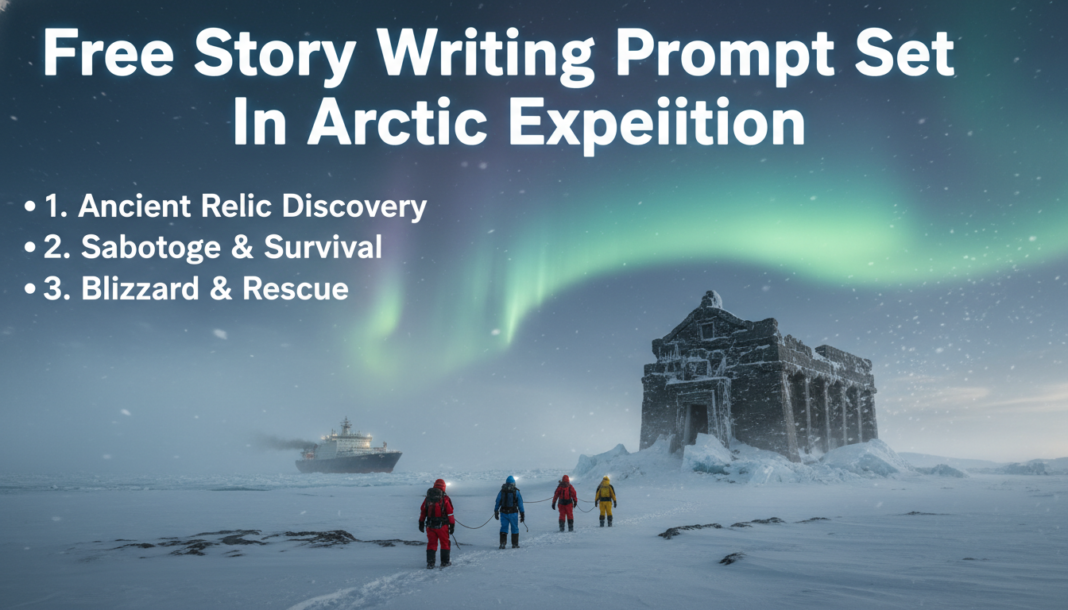
| Core Theme | Story Writing Prompt Set In Arctic Expedition (Narrative Driven) |
| Pacing Style | Slow-Burn / High-Octane Transition |
| Emotional Anchor | Catharsis & Resolution |
03. The AI Author Toolkit
V1 • The Hero’s Journey Arc
“Act as an award-winning novelist. Write a story about Story Writing Prompt Set In Arctic Expedition following the Hero’s Journey framework. Focus on the internal conflict of the protagonist, a vivid description of the setting, and a climactic resolution that ties back to the core theme. Use descriptive, sensory language.”
V2 • Suspense & Noir Thriller
“Create a high-tension suspense story involving Story Writing Prompt Set In Arctic Expedition. Use short, punchy sentences to increase the pace. Start with a mysterious hook and include a major plot twist at the 75% mark. Maintain a dark, atmospheric tone throughout the narrative.”
V3 • Emotional Flash Fiction
“Write a 500-word emotional flash fiction piece centered around Story Writing Prompt Set In Arctic Expedition. Focus on a single poignant moment between two characters. The dialogue should be subtle but heavy with subtext. End with a bittersweet realization that leaves the reader reflecting.”
04. Implementation & Genres
The versatility of an Arctic expedition narrative allows for diverse implementation across various storytelling platforms, tailored to different audience engagement models. For instance, a detailed account of a scientific discovery amidst the ice could form a compelling **blog series**, released episodically to build suspense and a loyal following. Each post could focus on a specific challenge, a new finding, or a character’s personal reflection, encouraging comments and discussion. This format benefits from the “Slow-Burn” pacing style, allowing readers to slowly immerse themselves in the unfolding drama.
Alternatively, a comprehensive **eBook** provides the space for a deep dive into complex character psychology and intricate plot twists, ideal for the “Hero’s Journey” or a “Suspense & Noir Thriller” approach. This allows authors to explore the internal struggles and the stark beauty/horror of the Arctic over hundreds of pages, offering a rich, immersive experience for dedicated readers. The emotional anchor of catharsis and resolution is particularly potent in this long-form format.
For **social media series**, the “Emotional Flash Fiction” prompt can be adapted to create short, poignant vignettes. Striking images of the Arctic paired with brief, evocative prose can capture attention and convey powerful emotional beats in a format suitable for platforms like Instagram or X (formerly Twitter). These micro-stories can build a community around the overarching theme, teasing elements of a larger narrative or standing alone as powerful meditations on human experience in extreme environments. Each genre twist—be it survival horror, sci-fi mystery, historical drama, or psychological thriller—offers a unique lens to explore the Arctic’s narrative potential, ensuring a broad appeal and fostering a deep, enduring connection with the fanbase.
Alternatively, a comprehensive **eBook** provides the space for a deep dive into complex character psychology and intricate plot twists, ideal for the “Hero’s Journey” or a “Suspense & Noir Thriller” approach. This allows authors to explore the internal struggles and the stark beauty/horror of the Arctic over hundreds of pages, offering a rich, immersive experience for dedicated readers. The emotional anchor of catharsis and resolution is particularly potent in this long-form format.
For **social media series**, the “Emotional Flash Fiction” prompt can be adapted to create short, poignant vignettes. Striking images of the Arctic paired with brief, evocative prose can capture attention and convey powerful emotional beats in a format suitable for platforms like Instagram or X (formerly Twitter). These micro-stories can build a community around the overarching theme, teasing elements of a larger narrative or standing alone as powerful meditations on human experience in extreme environments. Each genre twist—be it survival horror, sci-fi mystery, historical drama, or psychological thriller—offers a unique lens to explore the Arctic’s narrative potential, ensuring a broad appeal and fostering a deep, enduring connection with the fanbase.
Sample Opening Scene (Simulated)
The wind, a phantom limb, sought purchase beneath Dr. Aris Thorne’s layers, clawing at his resolve. His breath plumed, a fleeting ghost against the endless white. Two years had passed since the satellite imagery hinted at anomalies beneath the Greenland ice sheet, two years of chasing grants, assembling a crew, and ignoring the creeping dread that whispered of folly. Now, standing at the edge of the known world, the silence was more profound than any sound, a vast, indifferent canvas. The jagged peaks of ancient ice, blue-white teeth against a bruised sky, seemed to mock his ambition. He gripped the rough fabric of his parka, the cold seeping into his bones, a primal fear battling the scientific curiosity that had dragged him to this desolate, magnificent brink.