


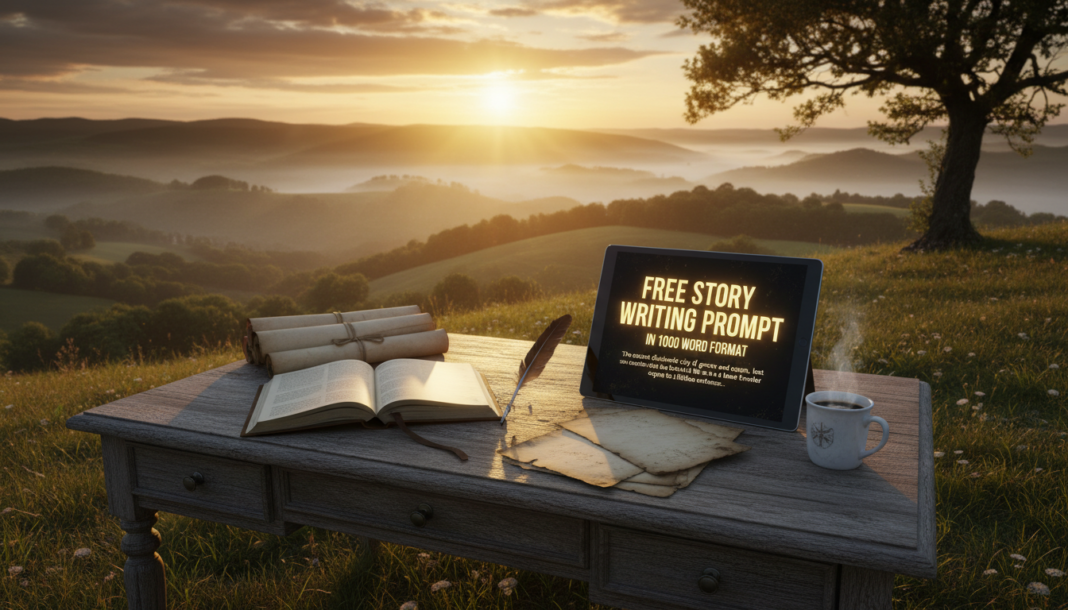
01. The Art of Narrative Architecture
The seemingly modest “1000-word story prompt” is, in fact, an exquisite crucible for narrative mastery. It demands precision, impact, and a deep understanding of storytelling mechanics. To weave a compelling plot within this concise format, a writer must treat every word as a meticulously placed brick in a grand, albeit compact, edifice. The core theme of your 1000-word story – be it love, loss, redemption, or existential dread – must be immediately apparent, yet unfold with a nuanced subtlety that belies the brevity. This is achieved by anchoring the narrative around a single, potent idea or conflict.
Character motivations are paramount. In a thousand words, there’s no room for extraneous subplots or underdeveloped personas. Your protagonist’s desires, fears, and internal conflicts must be crystal clear from the outset, acting as the engine of the plot. Why does this character *do* what they do? What stakes are truly personal to them? Even minor characters must serve a distinct purpose, either furthering the plot, revealing a facet of the protagonist, or enriching the world. An arc, even a miniature one, is essential; the character should not end up precisely where they began. This transformation, however slight, provides the catharsis and resolution vital for reader satisfaction.
Building tension in a 1000-word story is a delicate dance. It often involves a focused rising action, where the stakes are elevated quickly and consistently. Utilize a ticking clock, a moral dilemma, or an external threat that pushes the protagonist to their limits. Sensory details, often overlooked in the rush to convey plot, become powerful tools for immersion. Instead of lengthy descriptions, choose vivid, evocative details that hint at a larger world without requiring explicit exposition. A single image – the "creak of old floorboards" or the "smell of petrichor on dry earth" – can build atmosphere and hint at underlying tensions far more effectively than paragraphs of explanation.
This brings us to the cardinal rule: "Show, Don't Tell." In a 1000-word format, this isn't just a suggestion; it’s an absolute necessity. Instead of telling the reader a character is "scared," show their "trembling hands," the "shallow, rapid breaths," or the "shadows that seemed to stretch and twist." Rather than stating that a setting is "dangerous," describe the "barbed wire glinting under a sickly moon" or the "distant, guttural cry that echoed through the empty streets." Dialogue, too, must be lean and impactful, loaded with subtext that reveals character, advances the plot, and deepens conflict without wasted words. Every sentence must earn its place, propelling the narrative forward while simultaneously enriching its emotional and thematic depth, ensuring that "Story Writing Prompt In 1000 Word Format" transcends a mere word count and becomes a testament to focused, powerful storytelling.
02. Story Metadata Specs
| Core Theme | Story Writing Prompt In 1000 Word Format (Narrative Driven) |
| Pacing Style | Slow-Burn / High-Octane Transition |
| Emotional Anchor | Catharsis & Resolution |
03. The AI Author Toolkit
V1 • The Hero’s Journey Arc
“Act as an award-winning novelist. Write a story about Story Writing Prompt In 1000 Word Format following the Hero’s Journey framework. Focus on the internal conflict of the protagonist, a vivid description of the setting, and a climactic resolution that ties back to the core theme. Use descriptive, sensory language.”
V2 • Suspense & Noir Thriller
“Create a high-tension suspense story involving Story Writing Prompt In 1000 Word Format. Use short, punchy sentences to increase the pace. Start with a mysterious hook and include a major plot twist at the 75% mark. Maintain a dark, atmospheric tone throughout the narrative.”
V3 • Emotional Flash Fiction
“Write a 500-word emotional flash fiction piece centered around Story Writing Prompt In 1000 Word Format. Focus on a single poignant moment between two characters. The dialogue should be subtle but heavy with subtext. End with a bittersweet realization that leaves the reader reflecting.”
04. Implementation & Genres
The versatility of the “Story Writing Prompt In 1000 Word Format” extends far beyond mere exercise; it’s a powerful tool for engagement across various platforms and genres. For authors, understanding how to adapt this concise format is key to building a loyal fanbase and expanding their creative footprint.
Different genres find unique strengths in the 1000-word constraint. A **mystery or thriller** can thrive by focusing on a single, escalating incident or a crucial clue, ending with a shocking revelation or a lingering question. **Science fiction and fantasy** can use the format to explore a high-concept idea, a pivotal moment in a character's journey, or a snapshot of an intriguing world, hinting at much larger narratives without the need for extensive world-building. **Romance** can capture a meet-cute, a poignant farewell, or a moment of profound emotional connection, making every interaction impactful. Even **literary fiction** benefits, allowing for deep dives into character psychology or evocative atmospheric vignettes that resonate long after reading.
Strategically, 1000-word stories are incredibly adaptable. For **blogs**, they can form a series of "micro-narratives," allowing regular content updates that keep readers returning. Imagine a weekly "Flash Fiction Friday" or a serialized story released in digestible chunks. For **e-books or anthologies**, collections of these short pieces can provide a quick, satisfying read, often appealing to busy audiences looking for immediate gratification without a long-term commitment. Authors can release themed collections, showcasing different facets of their writing style or exploring variations on a central concept.
On **social media**, 1000-word stories can be broken down into tantalizing excerpts, creating anticipation for the full piece, or even presented in innovative, interactive ways. Think of a Twitter thread that tells a full story, or an Instagram series where visuals accompany short narrative segments. This kind of content builds a sense of community and direct engagement, fostering a dedicated readership. By consistently delivering high-quality, impactful narratives within this accessible format, authors can cultivate a distinctive voice, attract new followers, and nurture a loyal fanbase that appreciates the craft and impact of tightly woven storytelling.
Sample Opening Scene (Simulated)
The amber glow of the desk lamp fought a losing battle against the encroaching twilight. Elias traced the prompt on the screen with a weary finger: “Story Writing Prompt In 1000 Word Format.” A simple directive, yet it felt like a gauntlet thrown. His deadline loomed, a phantom weight on his chest, threatening to crush the last vestiges of his creative spirit. Each blank pixel mocked him, reflecting not a nascent narrative, but his own profound doubt. The story wasn’t just about a thousand words; it was about reclaiming the voice he feared he’d lost, a desperate echo of the storyteller he once was. The silence of his small apartment pressed in, an expectant audience for a symphony he couldn’t begin to compose.