


01. The Art of Narrative Architecture
Family conflict is a potent narrative engine, tapping into universal human experiences: love, loyalty, betrayal, regret, and the inescapable bonds of kinship. To weave this theme into a compelling plot, begin by identifying the *root cause* of the discord. Is it an inheritance dispute, a long-held secret, a clash of deeply ingrained values, or a betrayal that fractured trust years ago? This underlying issue will serve as the story’s gravitational center, informing every character’s motivation and action.
Building tension in family conflict often isn’t about grand explosions, though those can certainly occur. It frequently resides in the *unsaid*, the loaded glances across a dinner table, the passive-aggressive remarks, the shared history that hangs heavy in the air like a storm cloud. “Show, Don’t Tell” is paramount here. Instead of stating “the family was angry,” describe the trembling hands, the tightly set jaws, the way a character retreats to a solitary corner, or the sharp, brittle tone of their voice when addressing a sibling. Tension escalates through a series of increasingly difficult choices and confrontations. Each minor skirmish, each avoided conversation, ratchets up the emotional stakes until an unavoidable climax—a breaking point where truth must be confronted, or consequences embraced. The setting itself can amplify this: a cramped, inherited house can become a psychological pressure cooker, trapping characters with their unresolved issues.
Character arcs are intrinsically linked to the conflict. The protagonist (or multiple protagonists) must undergo significant internal and external transformation. What do they *want* at the beginning? What do they *need*? Often, what they want (e.g., to be right, to win an argument, to escape) is in direct opposition to what they truly need (e.g., forgiveness, understanding, liberation from the past). Their motivations should be deeply personal and understandable, even if flawed. A character might be driven by a desperate need for approval from a stern parent, leading them to make choices that alienate their siblings. Or perhaps they are burdened by a profound sense of responsibility, trying desperately to hold a crumbling family together, only to find their own identity dissolving in the process.
World-building in a family conflict narrative isn’t about fantastical realms, but about establishing the *family’s unique world*. What are its traditions, its unspoken rules, its foundational myths, its sacred cows? Who holds the practical and emotional power? What historical events—even seemingly minor ones, like a specific holiday tradition or a past argument over a pet—define its current dynamics? These intricate details create a rich, lived-in tapestry against which the conflict unfolds, making the family feel authentic. For example, a cherished family heirloom isn’t just an object; it’s a potent symbol of legacy, love, or resentment, its fate directly tied to the unfolding drama. Ultimately, a compelling family conflict narrative explores the messy, complex truth of human relationships, delving into the grey areas where love and resentment coexist, and where personal histories inexorably shape destinies.
Building tension in family conflict often isn’t about grand explosions, though those can certainly occur. It frequently resides in the *unsaid*, the loaded glances across a dinner table, the passive-aggressive remarks, the shared history that hangs heavy in the air like a storm cloud. “Show, Don’t Tell” is paramount here. Instead of stating “the family was angry,” describe the trembling hands, the tightly set jaws, the way a character retreats to a solitary corner, or the sharp, brittle tone of their voice when addressing a sibling. Tension escalates through a series of increasingly difficult choices and confrontations. Each minor skirmish, each avoided conversation, ratchets up the emotional stakes until an unavoidable climax—a breaking point where truth must be confronted, or consequences embraced. The setting itself can amplify this: a cramped, inherited house can become a psychological pressure cooker, trapping characters with their unresolved issues.
Character arcs are intrinsically linked to the conflict. The protagonist (or multiple protagonists) must undergo significant internal and external transformation. What do they *want* at the beginning? What do they *need*? Often, what they want (e.g., to be right, to win an argument, to escape) is in direct opposition to what they truly need (e.g., forgiveness, understanding, liberation from the past). Their motivations should be deeply personal and understandable, even if flawed. A character might be driven by a desperate need for approval from a stern parent, leading them to make choices that alienate their siblings. Or perhaps they are burdened by a profound sense of responsibility, trying desperately to hold a crumbling family together, only to find their own identity dissolving in the process.
World-building in a family conflict narrative isn’t about fantastical realms, but about establishing the *family’s unique world*. What are its traditions, its unspoken rules, its foundational myths, its sacred cows? Who holds the practical and emotional power? What historical events—even seemingly minor ones, like a specific holiday tradition or a past argument over a pet—define its current dynamics? These intricate details create a rich, lived-in tapestry against which the conflict unfolds, making the family feel authentic. For example, a cherished family heirloom isn’t just an object; it’s a potent symbol of legacy, love, or resentment, its fate directly tied to the unfolding drama. Ultimately, a compelling family conflict narrative explores the messy, complex truth of human relationships, delving into the grey areas where love and resentment coexist, and where personal histories inexorably shape destinies.
02. Story Metadata Specs
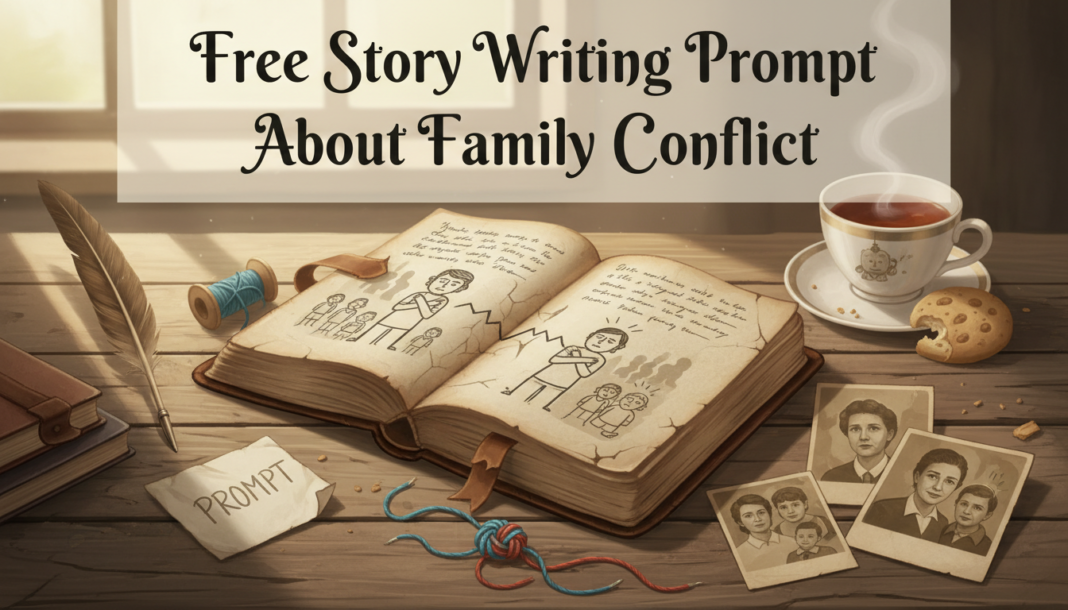
| Core Theme | Story Writing Prompt About Family Conflict (Narrative Driven) |
| Pacing Style | Slow-Burn / High-Octane Transition |
| Emotional Anchor | Catharsis & Resolution |
03. The AI Author Toolkit
V1 • The Hero’s Journey Arc
“Act as an award-winning novelist. Write a story about Story Writing Prompt About Family Conflict following the Hero’s Journey framework. Focus on the internal conflict of the protagonist, a vivid description of the setting, and a climactic resolution that ties back to the core theme. Use descriptive, sensory language.”
V2 • Suspense & Noir Thriller
“Create a high-tension suspense story involving Story Writing Prompt About Family Conflict. Use short, punchy sentences to increase the pace. Start with a mysterious hook and include a major plot twist at the 75% mark. Maintain a dark, atmospheric tone throughout the narrative.”
V3 • Emotional Flash Fiction
“Write a 500-word emotional flash fiction piece centered around Story Writing Prompt About Family Conflict. Focus on a single poignant moment between two characters. The dialogue should be subtle but heavy with subtext. End with a bittersweet realization that leaves the reader reflecting.”
04. Implementation & Genres
The theme of family conflict is incredibly versatile, adapting across a multitude of genres, each offering unique narrative avenues and opportunities for audience engagement. In **Literary Fiction**, family conflict delves deep into psychological realism and character studies. It might manifest as a slow-burn drama dissecting decades of unspoken grievances, ideal for an introspective ebook or a serialized blog exploring generational trauma. The focus here is on emotional truth and rich prose, appealing to readers who appreciate depth and complexity.
Shift to a **Thriller** or **Mystery**, and family conflict takes on a darker edge. A long-buried family secret could be the key to a murder, an inheritance battle might turn deadly, or a missing relative could unveil a web of familial deceit. The conflict provides potent motivation, driving suspense and plot twists. Such narratives excel as engaging short stories for social media bursts, intriguing podcast episodes, or fast-paced novellas that hook readers quickly.
In **Romance**, family conflict often serves as an external obstacle or an internal struggle. A disapproving family, sibling rivalry over a love interest, or the need to heal old wounds before finding happiness adds significant stakes. These stories are highly adaptable for serialized webtoons, episodic blogs, or traditional ebooks, fostering a dedicated fanbase invested in the characters’ ultimate triumph.
Even in **Fantasy** or **Sci-Fi**, family conflict can be a powerful engine. Dynastic struggles for power, ancient blood feuds, or the clash of familial loyalties against a grander cosmic threat elevate the stakes. These expansive narratives are ideal for multi-part ebook series or transmedia storytelling, building vast worlds and loyal communities around intricate family sagas. Regardless of genre, leveraging family conflict effectively creates relatable, high-stakes scenarios. Each format, from bite-sized social media posts to comprehensive ebooks, allows for different levels of engagement, keeping readers deeply invested in the lives of fictional families.
Shift to a **Thriller** or **Mystery**, and family conflict takes on a darker edge. A long-buried family secret could be the key to a murder, an inheritance battle might turn deadly, or a missing relative could unveil a web of familial deceit. The conflict provides potent motivation, driving suspense and plot twists. Such narratives excel as engaging short stories for social media bursts, intriguing podcast episodes, or fast-paced novellas that hook readers quickly.
In **Romance**, family conflict often serves as an external obstacle or an internal struggle. A disapproving family, sibling rivalry over a love interest, or the need to heal old wounds before finding happiness adds significant stakes. These stories are highly adaptable for serialized webtoons, episodic blogs, or traditional ebooks, fostering a dedicated fanbase invested in the characters’ ultimate triumph.
Even in **Fantasy** or **Sci-Fi**, family conflict can be a powerful engine. Dynastic struggles for power, ancient blood feuds, or the clash of familial loyalties against a grander cosmic threat elevate the stakes. These expansive narratives are ideal for multi-part ebook series or transmedia storytelling, building vast worlds and loyal communities around intricate family sagas. Regardless of genre, leveraging family conflict effectively creates relatable, high-stakes scenarios. Each format, from bite-sized social media posts to comprehensive ebooks, allows for different levels of engagement, keeping readers deeply invested in the lives of fictional families.
Sample Opening Scene (Simulated)
The ancient oak, scarred by lightning and a century of unforgiving winters, stood sentinel over the crumbling manor, its branches clawing at the bruised twilight sky. Elara traced the intricate knotwork carved into the gnarled trunk, each groove a silent accusation against the very foundations of her family. Inside, the heavy silence of the dining hall pressed down, a physical weight. Her brother, Kael, meticulously sliced his steak, the rhythmic *thud-thud* of the knife against ceramic the only sound in the cavernous room. His jaw was tight, a familiar fortress built against her pleas. *It wasn’t just the land he coveted; it was the past, rewritten in his favor, wiping her sacrifices clean.* Elara felt the familiar sting of injustice, a raw wound unhealed since Father’s biased will had been read, a festering resentment simmering beneath her composed façade. The scent of woodsmoke and damp earth clung to her, a bitter reminder of the home that was once sanctuary, now a battlefield of fractured loyalties and whispered resentments.