


01. The Art of Narrative Architecture
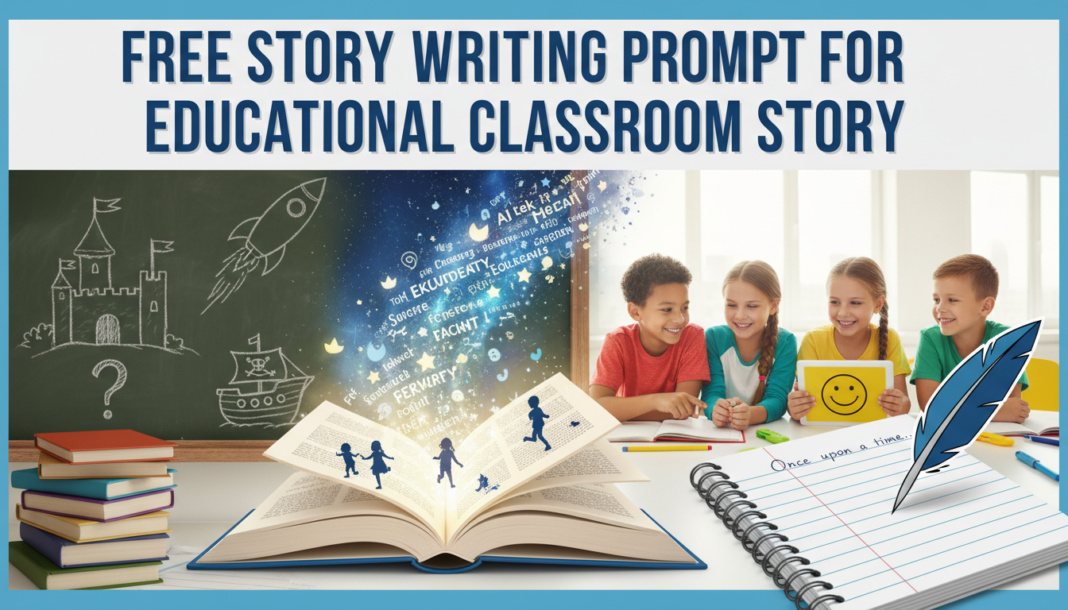
Crafting a compelling “Educational Classroom Story” demands a thoughtful approach to narrative psychology, weaving the core theme of learning, growth, and challenge into every plot beat and character introspection. The classroom, far from being a static backdrop, is a crucible for human experience, where intellectual and emotional development converge.
To build tension effectively in such a setting, consider the inherent stakes. It’s rarely life or death, but academic pressure, social dynamics, or the internal struggle for understanding can feel just as monumental to a protagonist. Tension can be subtle: the ticking clock of an exam, the unspoken rivalry for a scholarship, the fear of public speaking, or the profound confusion surrounding a complex subject. Show this tension through physical manifestations – a student’s restless leg, a teacher’s tight grip on a piece of chalk, the hushed whispers before a big announcement. Instead of stating “the atmosphere was tense,” describe the humid air clinging to uniforms, the strained silence punctuated only by the scritch of pencils, and the furtive glances exchanged across desks.
Character arcs are the heart of any educational narrative. A character often begins in a state of ignorance, fear, or overconfidence. Their journey is one of gradual enlightenment or humbling self-discovery. For instance, a gifted but arrogant student might learn the value of collaboration, or a shy, struggling learner might find their voice through an unexpected passion. Motivations must be deeply rooted: perhaps the protagonist seeks validation, understanding, belonging, or simply wants to avoid failure. What drives them to engage with the educational challenge, or conversely, to resist it? This internal conflict—the battle against self-doubt, preconceived notions, or external pressures—is often more powerful than any external antagonist.
World-building in a classroom story extends beyond desks and blackboards. It encompasses the school’s culture, the teacher’s philosophy, the relationships between students, and even the external community’s expectations. Is it an elite institution, a struggling public school, or an alternative learning environment? Each detail shapes the characters’ experiences and the challenges they face. “Show, Don’t Tell” is paramount here. Instead of saying “the teacher was inspiring,” depict them igniting a spark in a disinterested student’s eyes, using unconventional methods, or offering profound, personalized guidance. Reveal the school’s vibrant or oppressive atmosphere through sensory details: the smell of old books and floor wax, the echo of footsteps in empty halls, the cacophony of lunch breaks, or the hushed reverence of a library. These elements collectively transform “Story Writing Prompt For Educational Classroom Story” from a simple premise into a rich, immersive experience, resonating with the universal struggles and triumphs of learning.
To build tension effectively in such a setting, consider the inherent stakes. It’s rarely life or death, but academic pressure, social dynamics, or the internal struggle for understanding can feel just as monumental to a protagonist. Tension can be subtle: the ticking clock of an exam, the unspoken rivalry for a scholarship, the fear of public speaking, or the profound confusion surrounding a complex subject. Show this tension through physical manifestations – a student’s restless leg, a teacher’s tight grip on a piece of chalk, the hushed whispers before a big announcement. Instead of stating “the atmosphere was tense,” describe the humid air clinging to uniforms, the strained silence punctuated only by the scritch of pencils, and the furtive glances exchanged across desks.
Character arcs are the heart of any educational narrative. A character often begins in a state of ignorance, fear, or overconfidence. Their journey is one of gradual enlightenment or humbling self-discovery. For instance, a gifted but arrogant student might learn the value of collaboration, or a shy, struggling learner might find their voice through an unexpected passion. Motivations must be deeply rooted: perhaps the protagonist seeks validation, understanding, belonging, or simply wants to avoid failure. What drives them to engage with the educational challenge, or conversely, to resist it? This internal conflict—the battle against self-doubt, preconceived notions, or external pressures—is often more powerful than any external antagonist.
World-building in a classroom story extends beyond desks and blackboards. It encompasses the school’s culture, the teacher’s philosophy, the relationships between students, and even the external community’s expectations. Is it an elite institution, a struggling public school, or an alternative learning environment? Each detail shapes the characters’ experiences and the challenges they face. “Show, Don’t Tell” is paramount here. Instead of saying “the teacher was inspiring,” depict them igniting a spark in a disinterested student’s eyes, using unconventional methods, or offering profound, personalized guidance. Reveal the school’s vibrant or oppressive atmosphere through sensory details: the smell of old books and floor wax, the echo of footsteps in empty halls, the cacophony of lunch breaks, or the hushed reverence of a library. These elements collectively transform “Story Writing Prompt For Educational Classroom Story” from a simple premise into a rich, immersive experience, resonating with the universal struggles and triumphs of learning.
02. Story Metadata Specs
| Core Theme | Story Writing Prompt For Educational Classroom Story (Narrative Driven) |
| Pacing Style | Slow-Burn / High-Octane Transition |
| Emotional Anchor | Catharsis & Resolution |
03. The AI Author Toolkit
V1 • The Hero’s Journey Arc
“Act as an award-winning novelist. Write a story about Story Writing Prompt For Educational Classroom Story following the Hero’s Journey framework. Focus on the internal conflict of the protagonist, a vivid description of the setting, and a climactic resolution that ties back to the core theme. Use descriptive, sensory language.”
V2 • Suspense & Noir Thriller
“Create a high-tension suspense story involving Story Writing Prompt For Educational Classroom Story. Use short, punchy sentences to increase the pace. Start with a mysterious hook and include a major plot twist at the 75% mark. Maintain a dark, atmospheric tone throughout the narrative.”
V3 • Emotional Flash Fiction
“Write a 500-word emotional flash fiction piece centered around Story Writing Prompt For Educational Classroom Story. Focus on a single poignant moment between two characters. The dialogue should be subtle but heavy with subtext. End with a bittersweet realization that leaves the reader reflecting.”
04. Implementation & Genres
The versatility of a “Story Writing Prompt For Educational Classroom Story” allows for its adaptation across various digital formats, each designed to capture and build a loyal fanbase. The choice of genre and format significantly impacts audience engagement and content distribution.
For instance, a narrative following the **Hero’s Journey Arc** (V1) lends itself perfectly to a serialized blog or an episodic social media series. Imagine a student’s year-long struggle with a complex science project, documented week-by-week, celebrating small victories and relatable setbacks. This format builds anticipation and fosters a community around the character’s growth, suitable for platforms like Substack or even TikTok short story arcs. The inherent drama of overcoming academic challenges within a specific setting can resonate deeply, encouraging readers to follow the protagonist’s journey to its cathartic resolution.
Conversely, a **Suspense & Noir Thriller** (V2) based on an educational theme—perhaps uncovering a long-lost school secret or a mystery involving a legendary teacher—is ideal for a full-length e-book or a podcast series. The longer format allows for intricate plot development, red herrings, and the slow reveal of a dark, atmospheric truth, holding readers captive until the climactic twist. This genre thrives on deep immersion, making it less suitable for fleeting social media but perfect for dedicated readers or listeners seeking a profound narrative experience.
Lastly, **Emotional Flash Fiction** (V3) centered on a poignant classroom moment can be incredibly powerful as a standalone piece for literary magazines, an Instagram post with evocative imagery, or even as a series of micro-stories on Twitter. Its brevity and focus on a single, impactful emotion or realization make it highly shareable and effective for capturing attention quickly, leaving a lasting impression that encourages reflection and discussion. By understanding these genre-format synergies, creators can strategically deploy their “Educational Classroom Story” to maximize reach and audience connection.
For instance, a narrative following the **Hero’s Journey Arc** (V1) lends itself perfectly to a serialized blog or an episodic social media series. Imagine a student’s year-long struggle with a complex science project, documented week-by-week, celebrating small victories and relatable setbacks. This format builds anticipation and fosters a community around the character’s growth, suitable for platforms like Substack or even TikTok short story arcs. The inherent drama of overcoming academic challenges within a specific setting can resonate deeply, encouraging readers to follow the protagonist’s journey to its cathartic resolution.
Conversely, a **Suspense & Noir Thriller** (V2) based on an educational theme—perhaps uncovering a long-lost school secret or a mystery involving a legendary teacher—is ideal for a full-length e-book or a podcast series. The longer format allows for intricate plot development, red herrings, and the slow reveal of a dark, atmospheric truth, holding readers captive until the climactic twist. This genre thrives on deep immersion, making it less suitable for fleeting social media but perfect for dedicated readers or listeners seeking a profound narrative experience.
Lastly, **Emotional Flash Fiction** (V3) centered on a poignant classroom moment can be incredibly powerful as a standalone piece for literary magazines, an Instagram post with evocative imagery, or even as a series of micro-stories on Twitter. Its brevity and focus on a single, impactful emotion or realization make it highly shareable and effective for capturing attention quickly, leaving a lasting impression that encourages reflection and discussion. By understanding these genre-format synergies, creators can strategically deploy their “Educational Classroom Story” to maximize reach and audience connection.
Sample Opening Scene (Simulated)
The faint scent of lemon polish and forgotten textbooks clung to the air of Room 307, a familiar, almost suffocating comfort to Elias. Sunlight, fractured by grimy windowpanes, painted dusty motes dancing above his worn desktop. Another Monday, another monotonous drone from Professor Albright about Euclidean geometry. Elias stared at the incomprehensible symbols on the board, his internal world a chaotic storm of self-doubt, far removed from the ordered lines of a theorem. He could feel the weight of his father’s expectations, a silent hum behind his ears, demanding understanding that simply wouldn’t arrive. He traced the scuff marks on his battered sneakers, wishing for an escape, for a problem he actually understood. Then, the professor cleared his throat, holding up a cryptic, ancient-looking compass. “This,” Albright declared, “is your final project.” Elias felt a shiver of dread—and something else, a flicker of unfamiliar curiosity—uncoil in his gut.