


01. The Art of Narrative Architecture
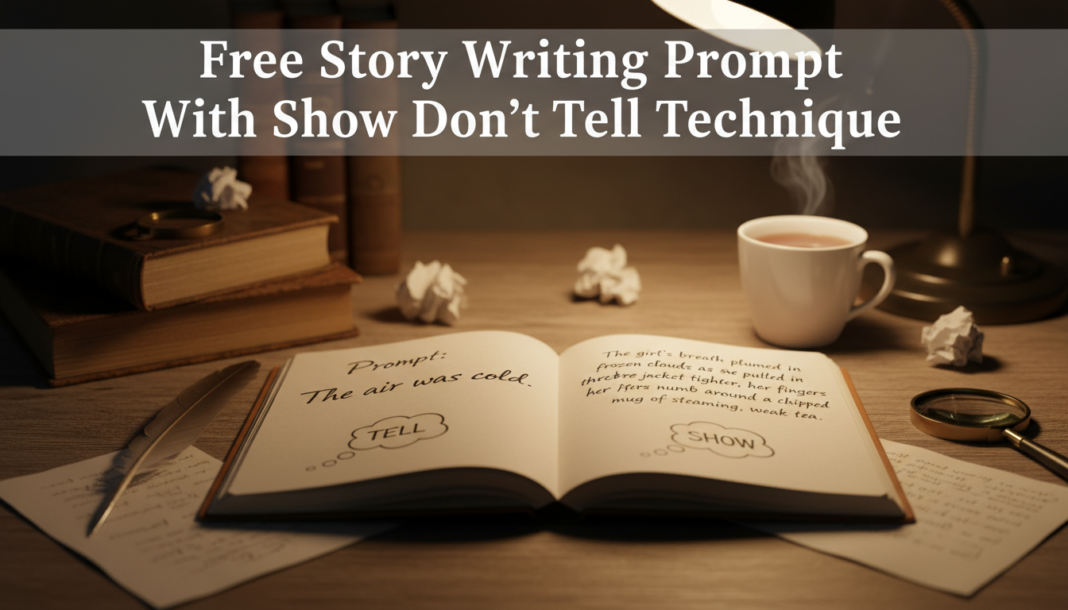
At the heart of compelling storytelling lies the principle of “Show, Don’t Tell.” This technique isn’t merely a stylistic preference; it’s a foundational approach to narrative psychology, designed to immerse readers, evoke genuine emotion, and foster a deeper connection with the story. When approaching a story writing prompt with this powerful technique in mind, the goal is to paint vivid pictures in the reader’s imagination, allowing them to experience the narrative rather than passively receiving information.
Building tension, for instance, is never achieved by explicitly stating "the character felt immense tension." Instead, a skilled author shows it through a character's constricted breath, the clammy grip on a worn diary, the way shadows lengthen unexpectedly in a familiar room, or the deafening silence that precedes an inevitable confrontation. Every subtle gesture, every heightened sensory detail, every unspoken word in a charged dialogue contributes to an escalating sense of unease or anticipation. It is the careful orchestration of these observable elements that pulls a reader to the edge of their seat, creating visceral suspense.
Similarly, character arcs thrive on showing transformation. A protagonist doesn't simply *become* brave; they are seen trembling, yet taking the first hesitant step towards a daunting challenge. Their fear is palpable in the tremor of their hands, their determination in the set of their jaw. We witness their growth through their changing actions, their new choices, and their evolving interactions with the world and other characters. Motivations are rarely declared outright; instead, they are woven into the fabric of the character's past, demonstrated through their persistent pursuit of a goal, their reactions to setbacks, or the quiet desperation in their eyes when confronted with failure. A character's deepest desires or hidden regrets emerge not from exposition, but from their choices, their sacrifices, and the internal battles they visibly wage.
World-building, too, becomes infinitely more immersive with "Show, Don't Tell." Rather than a paragraph describing a dystopian society, we see the rust-stained walls, hear the distant, rhythmic clang of automated labor, smell the acrid tang of recycled air, and observe the weary, downcast faces of its inhabitants. The oppressive atmosphere isn't stated; it's felt through the protagonist's numb acceptance, the rationing of dwindling resources, and the ever-present surveillance systems that flicker in the periphery. This approach allows the setting to become a character in itself, shaping the lives and struggles of those within it.
In essence, to weave "Story Writing Prompt With Show Dont Tell Technique" into a compelling plot is to prioritize sensory language, evocative imagery, active verbs, and precise details over abstract declarations. It’s about trusting the reader to infer meaning from observation, building a narrative tapestry where every thread—be it a character's silent struggle, a world's subtle decay, or a plot's mounting pressure—is vividly demonstrated, inviting profound engagement and emotional resonance.
02. Story Metadata Specs
| Core Theme | Story Writing Prompt With Show Dont Tell Technique (Narrative Driven) |
| Pacing Style | Slow-Burn / High-Octane Transition |
| Emotional Anchor | Catharsis & Resolution |
03. The AI Author Toolkit
V1 • The Hero’s Journey Arc
“Act as an award-winning novelist. Write a story about Story Writing Prompt With Show Dont Tell Technique following the Hero’s Journey framework. Focus on the internal conflict of the protagonist, a vivid description of the setting, and a climactic resolution that ties back to the core theme. Use descriptive, sensory language.”
V2 • Suspense & Noir Thriller
“Create a high-tension suspense story involving Story Writing Prompt With Show Dont Tell Technique. Use short, punchy sentences to increase the pace. Start with a mysterious hook and include a major plot twist at the 75% mark. Maintain a dark, atmospheric tone throughout the narrative.”
V3 • Emotional Flash Fiction
“Write a 500-word emotional flash fiction piece centered around Story Writing Prompt With Show Dont Tell Technique. Focus on a single poignant moment between two characters. The dialogue should be subtle but heavy with subtext. End with a bittersweet realization that leaves the reader reflecting.”
04. Implementation & Genres
The “Show, Don’t Tell” technique, while universal in its application, shines distinctly across various genres and story formats, serving as a powerful tool to build and sustain a loyal fanbase. Adapting this narrative philosophy to different mediums allows authors to maximize impact and connect with diverse audiences.
For **blogs**, leveraging "Show, Don't Tell" means crafting micro-narratives or impactful scenes within a larger article. Instead of stating "I felt overwhelmed by the city," a blog post might describe the oppressive hum of traffic, the dizzying kaleidoscope of flashing billboards, and the frantic scramble of pedestrians, allowing readers to viscerally feel the protagonist's sensory overload. This approach transforms a simple reflection into an engaging experience.
When developing **eBooks**, authors can expand this technique across broader canvases. World-building in a fantasy novel requires showing the ancient runes glowing faintly on crumbling temple walls, the biting wind carrying the scent of pine and something wild, rather than just describing the "magical forest." Character relationships in a romance are built through shared glances, unconscious touches, and unspoken agreements, not declarations of affection. The depth and richness created by showing rather than telling keep readers deeply invested through hundreds of pages.
**Social media series** demand a concise, potent application. A single evocative image paired with a line of dialogue heavy with subtext can tell a complex story. A short, sensory description of a character's morning routine, riddled with small, telling details, can reveal their internal conflict far more effectively than a direct statement of their feelings. This bite-sized, immersive storytelling encourages immediate engagement and sharing.
The impact of "Show, Don't Tell" also varies by genre:

*   **Mystery/Thriller:** Showing subtle clues, the protagonist's rising paranoia through their twitching eye or obsessive note-taking, and the chilling implications of a discovered object heightens suspense far more than explaining the plot.

*   **Science Fiction:** The complexities of a futuristic society are best shown through the mundane interactions of its citizens, the wear and tear on technology, or the subtle shifts in language.

*   **Literary Fiction:** The technique is paramount, relying on nuanced internal monologues, symbolic imagery, and ambiguous interactions to explore profound human truths.

*   **Horror:** The true terror lies in showing the ominous shadow, the unsettling silence, or the gradual distortion of the familiar, allowing fear to build organically within the reader's mind.
By consistently demonstrating emotions, actions, and environments, authors empower readers to participate actively in the narrative, fostering a sense of discovery and intellectual satisfaction. This deep, personal connection is the bedrock of a loyal fanbase, eager for the next immersive experience.
Sample Opening Scene (Simulated)
The old woman’s gaze lingered on the chipped ceramic mug, watching the steam curl and vanish. Her fingers, gnarled with age, traced the worn rim. Outside, the morning fog clung to the ancient cedar, muffling the usual clamor of the fishing village. She heard the distant thrum of an engine, a familiar punctuation, yet her shoulders remained hunched, a silent weight pressing them down. A fresh crack had appeared on the kitchen wall overnight, a jagged lightning bolt bisecting a peeling floral wallpaper. She knew what it meant, the way the silence in the house hummed with questions only she heard, questions she’d spent a lifetime unable to voice. The mug clinked faintly as she set it down, the sound echoing in the too-still room. Her lips pressed into a thin line, a story untold etched around her eyes.