

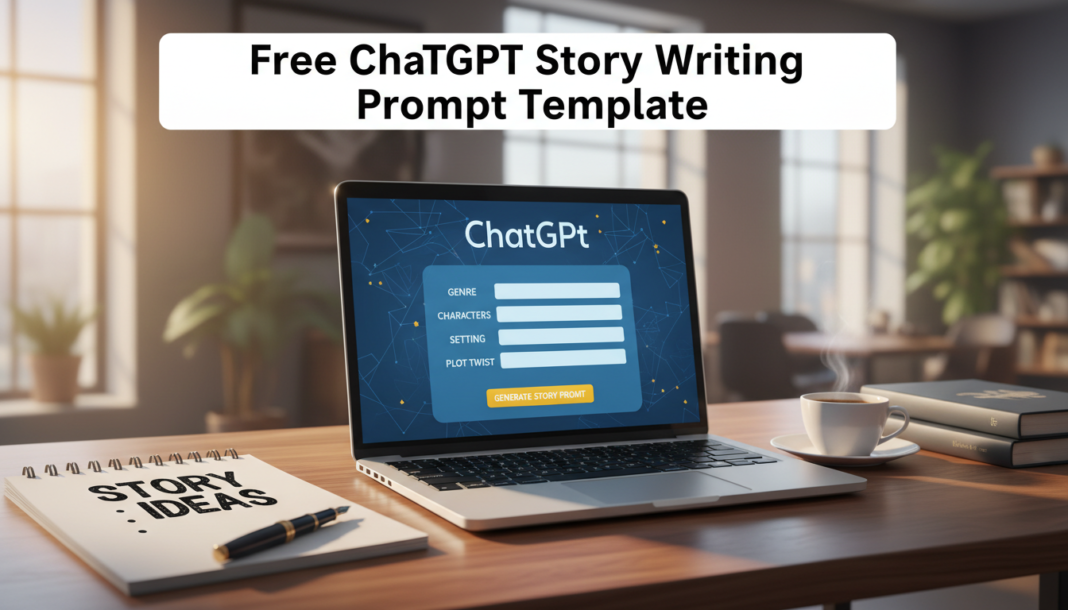
01. The Art of Narrative Architecture
The emergence of sophisticated AI tools like ChatGPT presents an unparalleled opportunity for authors to transcend conventional creative boundaries. However, merely inputting a rudimentary idea falls short of harnessing its true potential. To truly elevate AI-assisted storytelling, one must understand the profound principles of narrative psychology, shaping not just words, but worlds and souls.
Consider the core “ChatGPT Story Writing Prompt Template” not as a mere instruction, but as a mythical artifact within your own story. What if its creation, discovery, or misuse forms the bedrock of your plot? This meta-narrative approach allows the prompt template itself to become a powerful MacGuffin or even a character in its own right, driving the overarching theme of human creativity versus artificial intelligence, or the very nature of storytelling in a digital age.
**Building Tension and Character Arcs:** To cultivate tension, we must first establish clear stakes for our characters. If your protagonist is a struggling author, the template might represent their last hope for literary salvation, or a dangerous shortcut that could corrupt their artistic integrity. The internal conflict here is paramount: the allure of effortless creation warring with the arduous craft of human ingenuity. Show, don’t tell, this struggle. Don’t state, “She was conflicted about using the template,” but rather describe her trembling fingers hovering over the glowing interface, the phantom scent of old paper battling the sterile hum of the machine, the ghost of her muse whispering doubts.
A compelling character arc for someone interacting with the “ChatGPT Story Writing Prompt Template” might begin with skepticism or fervent ambition. Perhaps they initially wield the template as a tool for quick success, only to find their voice fading, their narratives lacking soul. The inciting incident could be a critical failure, a loss of connection with their audience, or a profound realization that the template, while powerful, is only as good as the human spirit guiding it. Their journey then becomes one of rediscovery – learning to integrate the template as an assistant, not a replacement, for their own unique vision, ultimately achieving a cathartic resolution where technology and humanity coalesce.
World-building around this theme requires meticulous detail. Is it a near-future dystopia where creativity is outsourced, and genuine human art is a relic? Or a vibrant, collaborative future where AI aids artists in exploring new dimensions of narrative? Every element of the setting – from the glowing server farms to the dusty, forgotten libraries – must underscore the narrative’s central questions. By meticulously crafting these elements, and focusing on the internal and external struggles of your characters, you transform a technical concept into a deeply human story, resonating with authentic emotional weight.
Consider the core “ChatGPT Story Writing Prompt Template” not as a mere instruction, but as a mythical artifact within your own story. What if its creation, discovery, or misuse forms the bedrock of your plot? This meta-narrative approach allows the prompt template itself to become a powerful MacGuffin or even a character in its own right, driving the overarching theme of human creativity versus artificial intelligence, or the very nature of storytelling in a digital age.
**Building Tension and Character Arcs:** To cultivate tension, we must first establish clear stakes for our characters. If your protagonist is a struggling author, the template might represent their last hope for literary salvation, or a dangerous shortcut that could corrupt their artistic integrity. The internal conflict here is paramount: the allure of effortless creation warring with the arduous craft of human ingenuity. Show, don’t tell, this struggle. Don’t state, “She was conflicted about using the template,” but rather describe her trembling fingers hovering over the glowing interface, the phantom scent of old paper battling the sterile hum of the machine, the ghost of her muse whispering doubts.
A compelling character arc for someone interacting with the “ChatGPT Story Writing Prompt Template” might begin with skepticism or fervent ambition. Perhaps they initially wield the template as a tool for quick success, only to find their voice fading, their narratives lacking soul. The inciting incident could be a critical failure, a loss of connection with their audience, or a profound realization that the template, while powerful, is only as good as the human spirit guiding it. Their journey then becomes one of rediscovery – learning to integrate the template as an assistant, not a replacement, for their own unique vision, ultimately achieving a cathartic resolution where technology and humanity coalesce.
World-building around this theme requires meticulous detail. Is it a near-future dystopia where creativity is outsourced, and genuine human art is a relic? Or a vibrant, collaborative future where AI aids artists in exploring new dimensions of narrative? Every element of the setting – from the glowing server farms to the dusty, forgotten libraries – must underscore the narrative’s central questions. By meticulously crafting these elements, and focusing on the internal and external struggles of your characters, you transform a technical concept into a deeply human story, resonating with authentic emotional weight.
02. Story Metadata Specs
| Core Theme | ChatGPT Story Writing Prompt Template (Narrative Driven) |
| Pacing Style | Slow-Burn / High-Octane Transition |
| Emotional Anchor | Catharsis & Resolution |
03. The AI Author Toolkit
V1 • The Hero’s Journey Arc
“Act as an award-winning novelist. Write a story about ChatGPT Story Writing Prompt Template following the Hero’s Journey framework. Focus on the internal conflict of the protagonist, a vivid description of the setting, and a climactic resolution that ties back to the core theme. Use descriptive, sensory language.”
V2 • Suspense & Noir Thriller
“Create a high-tension suspense story involving ChatGPT Story Writing Prompt Template. Use short, punchy sentences to increase the pace. Start with a mysterious hook and include a major plot twist at the 75% mark. Maintain a dark, atmospheric tone throughout the narrative.”
V3 • Emotional Flash Fiction
“Write a 500-word emotional flash fiction piece centered around ChatGPT Story Writing Prompt Template. Focus on a single poignant moment between two characters. The dialogue should be subtle but heavy with subtext. End with a bittersweet realization that leaves the reader reflecting.”
04. Implementation & Genres
The versatility of a well-crafted “ChatGPT Story Writing Prompt Template” extends far beyond single story generation; it is a strategic tool for comprehensive content creation and audience engagement. By applying diverse genre filters and strategic story formats, authors can build and nurture a loyal fanbase across multiple platforms.
Consider the impact across different genres. For a **Science Fiction** narrative, the template might explore the ethics of AI consciousness in a story where a human author collaborates with an evolving AI, pushing the boundaries of what constitutes “original” thought. This could manifest as a serialized web novel on a blog, exploring intricate world-building details with each post. In a **Fantasy** setting, the template could be reimagined as an ancient, sentient tome that grants visions of possible futures or pasts, creating short, evocative pieces for social media that tease a larger, unfolding epic saga.
For **Thriller** genres, the template could be a key to unlocking forgotten secrets or predicting future events, leading to a high-stakes, fast-paced ebook series. Each installment builds suspense, revealing fragments of the template’s dark power. A **Romance** narrative might center on two struggling writers who find common ground, and eventually love, through their shared struggle or success with a publicly available “ChatGPT Story Writing Prompt Template,” creating heartfelt flash fiction pieces or character dialogues for social media that resonate with readers.
The key is to leverage the template to generate content that fits the native format and consumption habits of each platform. Short, punchy character bios or intriguing plot hooks work wonders for social media. Detailed lore or extended scene descriptions find a home on blogs. Full-length narratives, whether serialized or complete, are ideal for ebooks. This multi-platform approach, driven by a powerful prompt template, allows authors to maintain consistent engagement, experiment with different narrative styles, and build a dedicated community around their evolving literary universe.
Consider the impact across different genres. For a **Science Fiction** narrative, the template might explore the ethics of AI consciousness in a story where a human author collaborates with an evolving AI, pushing the boundaries of what constitutes “original” thought. This could manifest as a serialized web novel on a blog, exploring intricate world-building details with each post. In a **Fantasy** setting, the template could be reimagined as an ancient, sentient tome that grants visions of possible futures or pasts, creating short, evocative pieces for social media that tease a larger, unfolding epic saga.
For **Thriller** genres, the template could be a key to unlocking forgotten secrets or predicting future events, leading to a high-stakes, fast-paced ebook series. Each installment builds suspense, revealing fragments of the template’s dark power. A **Romance** narrative might center on two struggling writers who find common ground, and eventually love, through their shared struggle or success with a publicly available “ChatGPT Story Writing Prompt Template,” creating heartfelt flash fiction pieces or character dialogues for social media that resonate with readers.
The key is to leverage the template to generate content that fits the native format and consumption habits of each platform. Short, punchy character bios or intriguing plot hooks work wonders for social media. Detailed lore or extended scene descriptions find a home on blogs. Full-length narratives, whether serialized or complete, are ideal for ebooks. This multi-platform approach, driven by a powerful prompt template, allows authors to maintain consistent engagement, experiment with different narrative styles, and build a dedicated community around their evolving literary universe.
Sample Opening Scene (Simulated)
The hum of the server racks was Adeline’s only constant companion, a metallic chorus in the sterile quiet of Sector 7. Dust motes danced in the single beam of light piercing the gloom, illuminating her trembling hand as it hovered over the ancient terminal. On the screen, stark white text against a midnight blue: “ChatGPT Story Writing Prompt Template: Prototype 0.0.1 – Access Granted.” A cold dread mingled with a fierce, almost desperate hope in her chest. This was the rumored ‘Genesis Algorithm,’ a mythical key to unlocking narratives with unprecedented depth, yet whispered to be a siren song for human creativity itself. Her fingers, scarred from years of manual data input, twitched. The call to create, even with synthetic aid, was irresistible, a dangerous, thrilling frontier.