

01. The Art of Narrative Architecture
The epistolary format – stories told through letters, diary entries, emails, or other documents – offers a uniquely intimate and powerful lens through which to explore complex narratives. Weaving a compelling plot within this structure demands a deep understanding of narrative psychology, as the story unfolds not through an omniscient narrator, but through the subjective voices of its characters.
The core theme, regardless of its specific nature (love, betrayal, discovery, survival), must be intrinsically tied to the act of communication itself. Why are these characters writing? What do they hope to achieve, confess, or conceal? Their motivations become the driving force behind every word. A character’s choice to write, or indeed, their silence, can reveal more about their internal world than pages of direct exposition. For instance, a character facing moral decay might write increasingly desperate or manipulative letters, their language becoming a mirror to their eroding conscience. Conversely, a protagonist embarking on a journey of self-discovery might exhibit a gradual shift in tone, vocabulary, and perspective across their correspondence, subtly charting their evolution without explicitly stating “I changed.”
Building tension in an epistolary story relies heavily on delayed gratification and fragmented revelation. Each letter or document serves as a puzzle piece, often arriving with an agonizing lag. The reader experiences a form of dramatic irony, piecing together events and foreseeing dangers that the characters themselves, bound by the linearity of their communications, cannot. This allows for the slow-burn development of suspense, where the dread isn’t just about *what* happens, but *when* the next piece of information arrives, and *how* it will alter the recipient’s reality. Character arcs are meticulously painted through these incremental changes. A character’s initial formality might dissolve into desperate pleas, or their confident assertions might crack under the weight of escalating crisis. The contrast between early and later communications vividly illustrates their journey.
World-building, too, takes on a nuanced form. Instead of broad descriptions, the setting is filtered through individual perspectives. A character might describe the biting wind of a desolate outpost in one letter, while another laments the stifling heat of a bustling city in theirs. These subjective details build a rich, multi-faceted world through accretion, reflecting the personal impact of the environment.
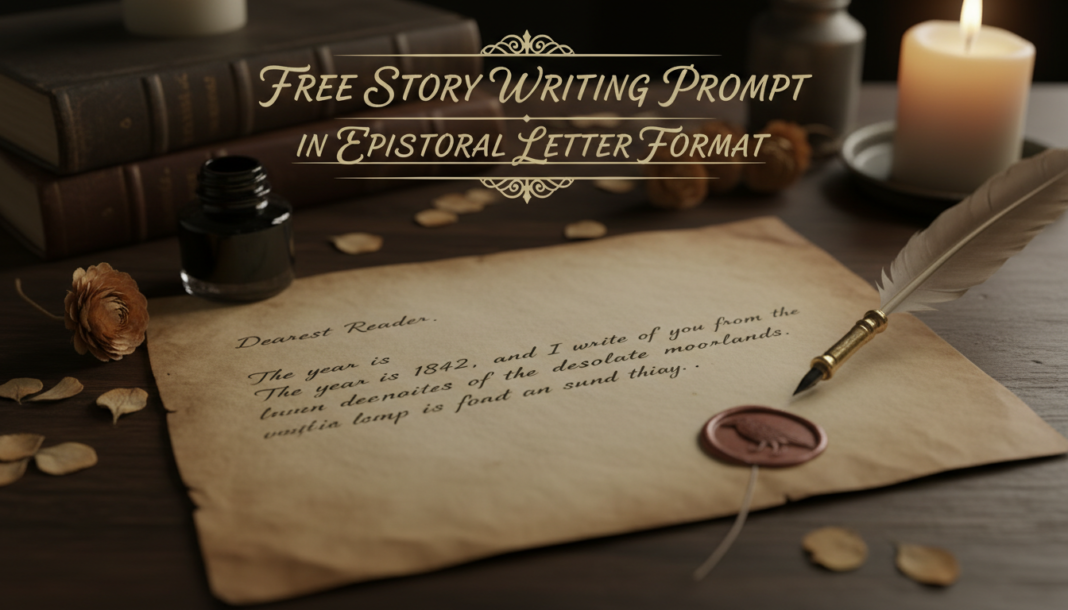
Crucially, “Show, Don’t Tell” transforms in the epistolary format. We don’t see a character cry; we read about ink-blotted tears obscuring a sentence, or a sudden change in handwriting that betrays a tremor of emotion. We don’t hear about their anger; we encounter furious underlining, clipped sentences, or the sudden, pointed cessation of communication. The letters themselves become artifacts, their physical form and content together “showing” the emotional truth, plot progression, and the profound changes within the characters and their world. This layered approach crafts a deeply immersive and psychologically resonant reading experience.
The core theme, regardless of its specific nature (love, betrayal, discovery, survival), must be intrinsically tied to the act of communication itself. Why are these characters writing? What do they hope to achieve, confess, or conceal? Their motivations become the driving force behind every word. A character’s choice to write, or indeed, their silence, can reveal more about their internal world than pages of direct exposition. For instance, a character facing moral decay might write increasingly desperate or manipulative letters, their language becoming a mirror to their eroding conscience. Conversely, a protagonist embarking on a journey of self-discovery might exhibit a gradual shift in tone, vocabulary, and perspective across their correspondence, subtly charting their evolution without explicitly stating “I changed.”
Building tension in an epistolary story relies heavily on delayed gratification and fragmented revelation. Each letter or document serves as a puzzle piece, often arriving with an agonizing lag. The reader experiences a form of dramatic irony, piecing together events and foreseeing dangers that the characters themselves, bound by the linearity of their communications, cannot. This allows for the slow-burn development of suspense, where the dread isn’t just about *what* happens, but *when* the next piece of information arrives, and *how* it will alter the recipient’s reality. Character arcs are meticulously painted through these incremental changes. A character’s initial formality might dissolve into desperate pleas, or their confident assertions might crack under the weight of escalating crisis. The contrast between early and later communications vividly illustrates their journey.
World-building, too, takes on a nuanced form. Instead of broad descriptions, the setting is filtered through individual perspectives. A character might describe the biting wind of a desolate outpost in one letter, while another laments the stifling heat of a bustling city in theirs. These subjective details build a rich, multi-faceted world through accretion, reflecting the personal impact of the environment.
Crucially, “Show, Don’t Tell” transforms in the epistolary format. We don’t see a character cry; we read about ink-blotted tears obscuring a sentence, or a sudden change in handwriting that betrays a tremor of emotion. We don’t hear about their anger; we encounter furious underlining, clipped sentences, or the sudden, pointed cessation of communication. The letters themselves become artifacts, their physical form and content together “showing” the emotional truth, plot progression, and the profound changes within the characters and their world. This layered approach crafts a deeply immersive and psychologically resonant reading experience.
02. Story Metadata Specs
| Core Theme | Epistolary Narratives (Character & Plot Driven) |
| Pacing Style | Slow-Burn / High-Octane Transition |
| Emotional Anchor | Catharsis & Resolution |
03. The AI Author Toolkit
V1 • The Hero’s Journey Arc
“Act as an award-winning novelist. Write a story in epistolary letter format following the Hero’s Journey framework. Focus on the internal conflict of the protagonist, a vivid description of the setting, and a climactic resolution that ties back to the core theme. Use descriptive, sensory language.”
V2 • Suspense & Noir Thriller
“Create a high-tension suspense story told through a series of letters. Use short, punchy sentences to increase the pace. Start with a mysterious hook and include a major plot twist at the 75% mark. Maintain a dark, atmospheric tone throughout the narrative.”
V3 • Emotional Flash Fiction
“Write a 500-word emotional flash fiction piece composed of exchanged letters or journal entries. Focus on a single poignant moment between two characters. The dialogue should be subtle but heavy with subtext. End with a bittersweet realization that leaves the reader reflecting.”
04. Implementation & Genres
The versatile nature of epistolary narratives makes them incredibly adaptable across various modern publishing platforms, serving not just as a storytelling device but as a powerful tool for community building and engagement.
For **blogs**, an epistolary story can be serialized as a “found document” or a series of unfolding letters/diary entries. Each post becomes a new installment, creating anticipation and encouraging readers to speculate and discuss in the comments section. This drip-feed approach builds a loyal audience who eagerly await the next communication, making them invested in the characters’ fates. Think of a historical mystery unfolding through archived letters, or a modern sci-fi epic told via interplanetary communiqués.
**Ebooks** are a natural home for the full-length epistolary novel. Here, the format can be expanded to include not just letters, but emails, chat logs, newspaper clippings, official reports, and even annotated text messages, creating a rich, multimedia narrative tapestry. This comprehensive presentation allows for deep immersion, enabling complex plots and intricate character development that might be too unwieldy for shorter formats. A collection of horror stories told through recovered police reports and victim diaries, or a poignant romance built on years of exchanged handwritten notes, thrive in the sustained environment of an ebook.
For **social media series**, the epistolary format offers unique opportunities for bite-sized, engaging content. Short, impactful “dispatches” can be shared on platforms like Instagram (e.g., a photo of a cryptic note with a narrative caption) or Twitter (e.g., a thread simulating a fragmented diary or an urgent message exchange). This format is excellent for building hype, introducing intriguing mysteries, or showcasing character voices through brief, poignant snippets. It encourages immediate interaction, as followers can react, share, and theorize about the unfolding story, turning passive readers into active participants and fostering a highly engaged fanbase. By segmenting the narrative thoughtfully, authors can leverage the native functions of each platform to create an interactive, multi-platform storytelling experience that captures attention and retains interest.
For **blogs**, an epistolary story can be serialized as a “found document” or a series of unfolding letters/diary entries. Each post becomes a new installment, creating anticipation and encouraging readers to speculate and discuss in the comments section. This drip-feed approach builds a loyal audience who eagerly await the next communication, making them invested in the characters’ fates. Think of a historical mystery unfolding through archived letters, or a modern sci-fi epic told via interplanetary communiqués.
**Ebooks** are a natural home for the full-length epistolary novel. Here, the format can be expanded to include not just letters, but emails, chat logs, newspaper clippings, official reports, and even annotated text messages, creating a rich, multimedia narrative tapestry. This comprehensive presentation allows for deep immersion, enabling complex plots and intricate character development that might be too unwieldy for shorter formats. A collection of horror stories told through recovered police reports and victim diaries, or a poignant romance built on years of exchanged handwritten notes, thrive in the sustained environment of an ebook.
For **social media series**, the epistolary format offers unique opportunities for bite-sized, engaging content. Short, impactful “dispatches” can be shared on platforms like Instagram (e.g., a photo of a cryptic note with a narrative caption) or Twitter (e.g., a thread simulating a fragmented diary or an urgent message exchange). This format is excellent for building hype, introducing intriguing mysteries, or showcasing character voices through brief, poignant snippets. It encourages immediate interaction, as followers can react, share, and theorize about the unfolding story, turning passive readers into active participants and fostering a highly engaged fanbase. By segmenting the narrative thoughtfully, authors can leverage the native functions of each platform to create an interactive, multi-platform storytelling experience that captures attention and retains interest.
Sample Opening Scene (Simulated)
14th March, New Haven,
My Dearest Aunt Eleanor,
The fog clings to the old city today, thick and damp, just as it always does this time of year. My windows are streaked with condensation, blurring the precise lines of the university campus outside, making the gothic spires appear like spectral fingers reaching into the grey sky. Another term begins, and with it, the familiar ache of expectation and dread. My research into the forgotten archives consumes me, yet the deeper I delve, the more I feel a distinct chill, not from the weather, but from the whispers of history I unearth. Professor Eldridge, bless his eccentric soul, believes I’m on the verge of something profound, a discovery that could redefine our understanding of the ‘Great Silence’. But sometimes, I wonder if some silences are best left undisturbed. My hands tremble as I write this, a curious tremor I can’t quite dismiss.
Your loving,
Isabelle
My Dearest Aunt Eleanor,
The fog clings to the old city today, thick and damp, just as it always does this time of year. My windows are streaked with condensation, blurring the precise lines of the university campus outside, making the gothic spires appear like spectral fingers reaching into the grey sky. Another term begins, and with it, the familiar ache of expectation and dread. My research into the forgotten archives consumes me, yet the deeper I delve, the more I feel a distinct chill, not from the weather, but from the whispers of history I unearth. Professor Eldridge, bless his eccentric soul, believes I’m on the verge of something profound, a discovery that could redefine our understanding of the ‘Great Silence’. But sometimes, I wonder if some silences are best left undisturbed. My hands tremble as I write this, a curious tremor I can’t quite dismiss.
Your loving,
Isabelle