


01. The Art of Narrative Architecture
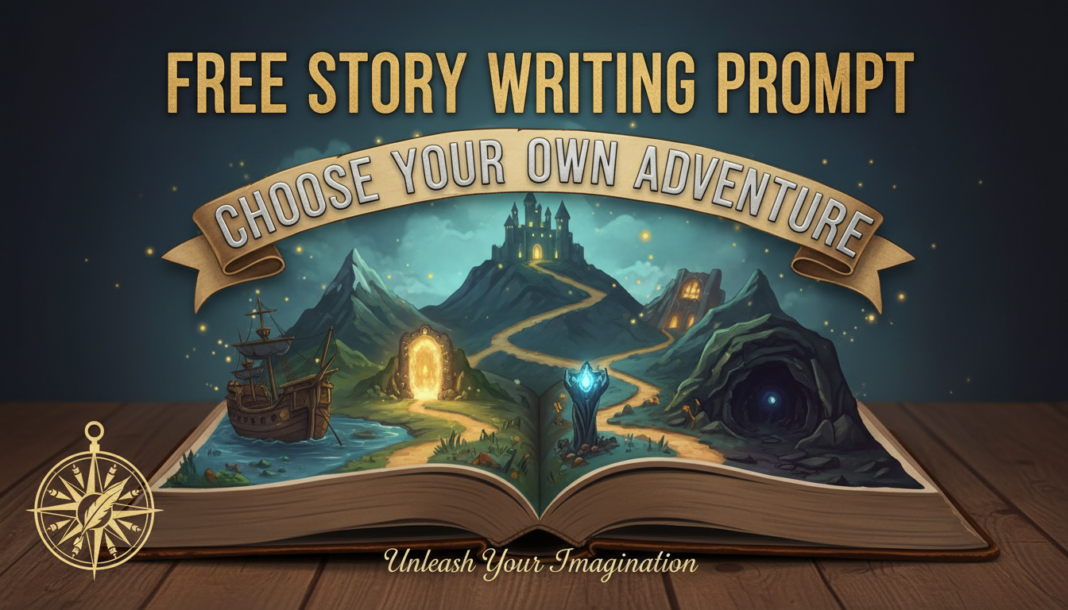
Crafting a “Choose Your Own Adventure” (CYOA) narrative transcends traditional linear storytelling; it demands a unique blend of foresight, structural ingenuity, and deep psychological understanding. The core challenge lies in weaving a central theme—like the inherent “Story Writing Prompt For Choose Your Own Adventure” concept—through a labyrinth of choices, ensuring each path feels meaningful and contributes to a cohesive, albeit branching, plot.
The initial step involves defining the core dilemma or question inherent in “Story Writing Prompt For Choose Your Own Adventure.” This central theme acts as the gravitational pull for all subsequent choices and consequences. For instance, if the prompt is about “redemption,” every choice should somehow test the protagonist’s capacity for forgiveness, sacrifice, or self-improvement. This thematic anchor prevents the narrative from sprawling into aimless digressions, ensuring that no matter the path, the player is always engaging with the heart of the story.
Character motivations in a CYOA are multifaceted. While the author defines the protagonist’s initial drive, the player’s choices sculpt the character’s evolving psyche. To build tension, authors must engineer dilemmas that pit internal conflicts against external pressures. “Does your character betray a friend for a greater good, or uphold loyalty at personal cost?” Such choices aren’t merely plot points; they are moments of character definition. The internal struggle must be ‘shown’ through their hesitations, their whispered thoughts, or the physical manifestations of their anxiety, rather than simply ‘told.’ A clenched jaw, a tremor in their hand, or a fleeting glance at a significant object can convey more than paragraphs of exposition.
Character arcs in CYOA are not singular but rather a collection of potential evolutions. Each major branch should present a distinct opportunity for growth or decline. A “successful” arc might see the character overcoming their flaw, while another path could lead to their tragic downfall, mirroring the consequences of poor choices. The beauty is that the reader actively participates in forging this arc. Tension is built by constantly reminding the reader of the stakes: failure isn’t just a narrative device; it’s a tangible outcome of their decision. Time limits, scarce resources, or moral quandaries amplify this tension, forcing quick, impactful choices.
World-building in a branching narrative requires meticulous consistency. Even as the plot diverges, the fundamental rules, history, and atmosphere of the world must remain steadfast. “Show, Don’t Tell” becomes paramount here. Instead of stating “the ancient city was dangerous,” describe the ominous gargoyles leering from crumbling facades, the flickering gas lamps casting long, dancing shadows, and the hushed whispers of illicit transactions echoing from narrow alleyways. Each choice should allow the reader to interact with and discover more about this world, making their immersion deeper. The world itself should feel like a character, reacting subtly to the player’s presence and choices.
The initial step involves defining the core dilemma or question inherent in “Story Writing Prompt For Choose Your Own Adventure.” This central theme acts as the gravitational pull for all subsequent choices and consequences. For instance, if the prompt is about “redemption,” every choice should somehow test the protagonist’s capacity for forgiveness, sacrifice, or self-improvement. This thematic anchor prevents the narrative from sprawling into aimless digressions, ensuring that no matter the path, the player is always engaging with the heart of the story.
Character motivations in a CYOA are multifaceted. While the author defines the protagonist’s initial drive, the player’s choices sculpt the character’s evolving psyche. To build tension, authors must engineer dilemmas that pit internal conflicts against external pressures. “Does your character betray a friend for a greater good, or uphold loyalty at personal cost?” Such choices aren’t merely plot points; they are moments of character definition. The internal struggle must be ‘shown’ through their hesitations, their whispered thoughts, or the physical manifestations of their anxiety, rather than simply ‘told.’ A clenched jaw, a tremor in their hand, or a fleeting glance at a significant object can convey more than paragraphs of exposition.
Character arcs in CYOA are not singular but rather a collection of potential evolutions. Each major branch should present a distinct opportunity for growth or decline. A “successful” arc might see the character overcoming their flaw, while another path could lead to their tragic downfall, mirroring the consequences of poor choices. The beauty is that the reader actively participates in forging this arc. Tension is built by constantly reminding the reader of the stakes: failure isn’t just a narrative device; it’s a tangible outcome of their decision. Time limits, scarce resources, or moral quandaries amplify this tension, forcing quick, impactful choices.
World-building in a branching narrative requires meticulous consistency. Even as the plot diverges, the fundamental rules, history, and atmosphere of the world must remain steadfast. “Show, Don’t Tell” becomes paramount here. Instead of stating “the ancient city was dangerous,” describe the ominous gargoyles leering from crumbling facades, the flickering gas lamps casting long, dancing shadows, and the hushed whispers of illicit transactions echoing from narrow alleyways. Each choice should allow the reader to interact with and discover more about this world, making their immersion deeper. The world itself should feel like a character, reacting subtly to the player’s presence and choices.
02. Story Metadata Specs
| Core Theme | Story Writing Prompt For Choose Your Own Adventure (Narrative Driven) |
| Pacing Style | Slow-Burn / High-Octane Transition |
| Emotional Anchor | Catharsis & Resolution |
03. The AI Author Toolkit
V1 • The Hero’s Journey Arc
“Act as an award-winning novelist. Write a story about Story Writing Prompt For Choose Your Own Adventure following the Hero’s Journey framework. Focus on the internal conflict of the protagonist, a vivid description of the setting, and a climactic resolution that ties back to the core theme. Use descriptive, sensory language.”
V2 • Suspense & Noir Thriller
“Create a high-tension suspense story involving Story Writing Prompt For Choose Your Own Adventure. Use short, punchy sentences to increase the pace. Start with a mysterious hook and include a major plot twist at the 75% mark. Maintain a dark, atmospheric tone throughout the narrative.”
V3 • Emotional Flash Fiction
“Write a 500-word emotional flash fiction piece centered around Story Writing Prompt For Choose Your Own Adventure. Focus on a single poignant moment between two characters. The dialogue should be subtle but heavy with subtext. End with a bittersweet realization that leaves the reader reflecting.”
04. Implementation & Genres
The versatile nature of “Choose Your Own Adventure” narratives allows for dynamic implementation across various digital platforms, enabling authors to cultivate a loyal fanbase by providing engaging, interactive experiences.
For **blogs**, CYOA can transform passive reading into active participation. A serialized story, broken into weekly installments, can present a pivotal choice at the end of each post, inviting readers to vote via polls or comments. The author then crafts the next installment based on the community’s decision, creating a shared narrative journey. This iterative process fosters a strong sense of community and keeps readers eagerly returning, turning casual visitors into dedicated followers.
**Ebooks** offer a more robust framework for complex CYOA structures. Hyperlinks can guide readers seamlessly through branching paths, allowing for intricate plots and multiple endings. Specialized interactive ebook formats or even dedicated apps can enhance the experience with multimedia elements. Authors can leverage this for premium content, offering deeper dives into world-building or additional “side quests” that reward dedicated readers. The re-readability inherent in CYOA ebooks, as readers explore different paths, significantly boosts engagement and value perception.
**Social media series** thrive on bite-sized, high-impact choices. Platforms like Instagram Stories, Twitter threads, or TikTok can present micro-narratives where users swipe, tap, or comment to make a decision. A fantasy CYOA on Instagram could ask: “Do you confront the dragon (swipe up) or seek the ancient relic (tap left)?” This rapid-fire interaction capitalizes on short attention spans and viral sharing, quickly expanding an author’s reach and building a young, engaged audience.
The impact of different genres on CYOA is profound. **Fantasy** lends itself well to epic quests, moral dilemmas, and discovering magical artifacts, perfect for complex ebook structures. **Horror/Thriller** thrives on tension-building choices and jump scares, ideal for short, suspenseful social media or blog series where swift decisions lead to immediate, terrifying consequences. **Romance** CYOAs can explore relationship complexities, character compatibility, and emotional intimacy, appealing strongly to interactive blogs or apps that let readers navigate different love stories. **Sci-Fi** offers opportunities for exploring ethical dilemmas, technological advancements, and alternate futures, suitable for all formats but particularly compelling in detailed ebooks. Ultimately, the interactive nature of CYOA builds a unique bond between author and reader, transforming storytelling into a collaborative adventure.
For **blogs**, CYOA can transform passive reading into active participation. A serialized story, broken into weekly installments, can present a pivotal choice at the end of each post, inviting readers to vote via polls or comments. The author then crafts the next installment based on the community’s decision, creating a shared narrative journey. This iterative process fosters a strong sense of community and keeps readers eagerly returning, turning casual visitors into dedicated followers.
**Ebooks** offer a more robust framework for complex CYOA structures. Hyperlinks can guide readers seamlessly through branching paths, allowing for intricate plots and multiple endings. Specialized interactive ebook formats or even dedicated apps can enhance the experience with multimedia elements. Authors can leverage this for premium content, offering deeper dives into world-building or additional “side quests” that reward dedicated readers. The re-readability inherent in CYOA ebooks, as readers explore different paths, significantly boosts engagement and value perception.
**Social media series** thrive on bite-sized, high-impact choices. Platforms like Instagram Stories, Twitter threads, or TikTok can present micro-narratives where users swipe, tap, or comment to make a decision. A fantasy CYOA on Instagram could ask: “Do you confront the dragon (swipe up) or seek the ancient relic (tap left)?” This rapid-fire interaction capitalizes on short attention spans and viral sharing, quickly expanding an author’s reach and building a young, engaged audience.
The impact of different genres on CYOA is profound. **Fantasy** lends itself well to epic quests, moral dilemmas, and discovering magical artifacts, perfect for complex ebook structures. **Horror/Thriller** thrives on tension-building choices and jump scares, ideal for short, suspenseful social media or blog series where swift decisions lead to immediate, terrifying consequences. **Romance** CYOAs can explore relationship complexities, character compatibility, and emotional intimacy, appealing strongly to interactive blogs or apps that let readers navigate different love stories. **Sci-Fi** offers opportunities for exploring ethical dilemmas, technological advancements, and alternate futures, suitable for all formats but particularly compelling in detailed ebooks. Ultimately, the interactive nature of CYOA builds a unique bond between author and reader, transforming storytelling into a collaborative adventure.
Sample Opening Scene (Simulated)
The air in the forgotten attic tasted of dust and despair, a dry cough waiting to happen. Elara clutched the faded photograph—her grandmother’s smiling face, vibrant in a long-dead summer. Below it, scribbled on the brittle back, were two words: “The Labyrinth. Choose.” A shiver, not from the draft, traced its way down her spine. Her mundane life in the city felt miles away, overshadowed by the ominous whisper of this ancient secret. The old wooden chest, half-buried under a shroud, pulsed with a faint, insistent energy. To open it meant inviting the unknown, risking everything for a family truth she wasn’t sure she wanted. Yet, to turn away, to leave the secret undisturbed, felt like a deeper betrayal, a surrender to the suffocating ordinary she’d always resented. Her fingers brushed the cold, tarnished latch. The decision coiled in her gut, heavy and undeniable.