


01. The Art of Narrative Architecture
The post-apocalyptic survival narrative is more than just a setting; it’s a crucible for the human spirit, an relentless test of resilience, morality, and hope. To weave the theme of “Story Writing Prompt For Post Apocalyptic Survival” into a truly compelling plot, an author must delve deep into narrative psychology, focusing on intricate character motivations, immersive world-building, and the powerful principle of “Show, Don’t Tell.”
At its core, post-apocalyptic survival strips humanity bare, exposing fundamental needs and desires. Character motivations must extend beyond mere physical survival. While securing food, water, and shelter is a primal driver, ask what emotional scars your protagonist carries from the "before times." Is it the haunting memory of a lost family, the crushing guilt of a past failure, or a desperate, illogical hope for a future that seems impossible? These internal struggles provide the emotional anchor for their journey. A character driven by a promise made to a dying loved one will make vastly different choices than one seeking pure self-preservation or even revenge. Their internal conflicts – the battle between cynicism and idealism, between ruthless efficiency and a flicker of compassion – are what elevate a survival story from a mere action sequence to a profound exploration of humanity.
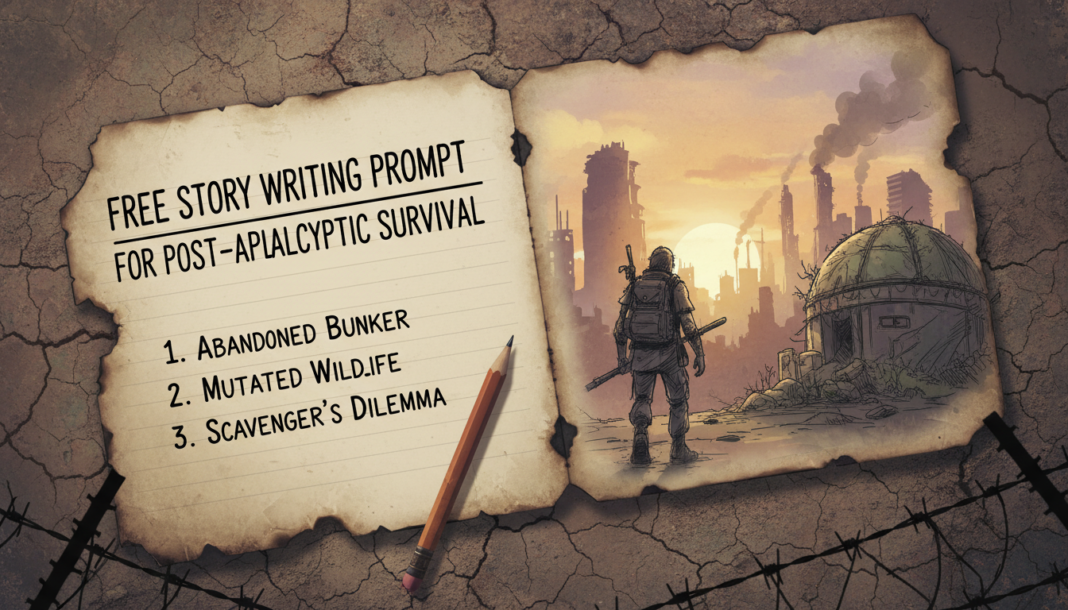
World-building in this genre isn't just about describing ruins; it's about making the environment an active, formidable antagonist. Show the decay: skeletal skyscrapers clawing at a perpetually grey sky, overgrown highways choked with rusted vehicles, and the eerie silence broken only by the whisper of mutated wind or the distant, unsettling creak of collapsing infrastructure. Engage all five senses: the metallic tang of irradiated rain, the pervasive stench of mold and decay, the grating sound of scavenged metal, the rough feel of patched clothing against skin, the bitter taste of scavenged rations. Instead of stating "resources were scarce," *show* a character meticulously picking through a rusted can of beans, savoring each mouthful, or engaging in a tense, silent standoff over a dwindling water supply. The world's dangers — be they environmental hazards, mutated creatures, or desperate human factions — should not only pose external threats but also force characters into difficult moral dilemmas, further defining their arcs.
Building tension in a survival narrative is a delicate art. It begins with a constant, low hum of anxiety: the pervasive threat of starvation, exposure, or sudden violence. This background tension is then punctuated by spikes of high-octane dread – a shadowy figure in the distance, a strange sound in the night, a betrayal within the group. The protagonist's character arc is defined by their response to this relentless pressure. Do they harden into an unfeeling shell, or do they discover an inner strength and compassion they never knew they possessed? Perhaps a cynical loner learns the value of community, or a naive optimist is forced to confront the brutal realities of this new world. Their journey is a continuous test of their core beliefs, leading to profound transformation or tragic downfall. Remember to "Show, Don't Tell" – convey desperation through gnawed fingernails and hollow eyes, fear through quick, furtive glances, and hope through small, defiant acts of rebuilding.
02. Story Metadata Specs
| Core Theme | Story Writing Prompt For Post Apocalyptic Survival (Narrative Driven) |
| Pacing Style | Slow-Burn / High-Octane Transition |
| Emotional Anchor | Catharsis & Resolution |
03. The AI Author Toolkit
V1 • The Hero’s Journey Arc
“Act as an award-winning novelist. Write a story about Story Writing Prompt For Post Apocalyptic Survival following the Hero’s Journey framework. Focus on the internal conflict of the protagonist, a vivid description of the setting, and a climactic resolution that ties back to the core theme. Use descriptive, sensory language.”
V2 • Suspense & Noir Thriller
“Create a high-tension suspense story involving Story Writing Prompt For Post Apocalyptic Survival. Use short, punchy sentences to increase the pace. Start with a mysterious hook and include a major plot twist at the 75% mark. Maintain a dark, atmospheric tone throughout the narrative.”
V3 • Emotional Flash Fiction
“Write a 500-word emotional flash fiction piece centered around Story Writing Prompt For Post Apocalyptic Survival. Focus on a single poignant moment between two characters. The dialogue should be subtle but heavy with subtext. End with a bittersweet realization that leaves the reader reflecting.”
04. Implementation & Genres
The theme of “Story Writing Prompt For Post Apocalyptic Survival” is remarkably versatile, capable of being molded into various genres, each offering a distinct flavor and appeal. The chosen genre fundamentally impacts pacing, tone, and the primary focus of the narrative.
In a **Horror** approach, the survival aspect shifts to the psychological terror of isolation, the monstrous nature of mutated threats, or the ultimate depravity humans can descend to. The story prioritizes dread, jump scares, and visceral fear. A **Sci-Fi** interpretation could explore the collapse of advanced technology, the emergence of strange new ecosystems, or ethical dilemmas surrounding rebuilding society with limited resources, perhaps introducing alien intervention or technological remnants gone awry. **Drama** or **Literary Fiction** focuses intensely on the human condition, moral ambiguities, grief, and the profound bonds forged in adversity, often prioritizing internal struggle and character relationships over external threats. For an **Action/Adventure** narrative, the emphasis is on high-stakes escapes, daring raids for dwindling supplies, and epic journeys across perilous landscapes, featuring dynamic sequences and strategic combat. Finally, a **Mystery/Thriller** blend could unravel the truth behind the apocalypse, hunt for a cure, or investigate strange phenomena within the ruins, building suspense through clues and unexpected revelations.
Leveraging different story formats allows creators to build and sustain a loyal fanbase around "Story Writing Prompt For Post Apocalyptic Survival." Short, episodic tales, character profiles, or world lore entries can be published on **blogs**, building anticipation and allowing readers to engage with specific narrative elements. Longer, more developed narratives are ideal for **ebooks**, offering creative freedom for self-published authors and allowing for extensive series that keep readers invested in ongoing character journeys. For **social media series**, micro-fiction, character monologues, or cryptic messages can be shared, often enhanced with visual elements like mood boards or AI-generated art. Interactive elements, such as "choose your own adventure" polls, can further boost engagement. Ultimately, **transmedia storytelling** can create a rich, interconnected universe, extending the narrative across platforms—perhaps a character's journal entries on a blog, a map of the ruined world on Instagram, and a full-length ebook exploring a key event. This multi-faceted approach deepens immersion and fosters a devoted community of readers.
Sample Opening Scene (Simulated)
The silence was a thick, cloying blanket draped over the city, broken only by the scrape of Elias’s boot on loose rubble and the distant, unsettling shriek of wind through hollowed-out towers. Two years. Two years since the bombs had fallen, since the world had become this skeletal monument to human folly, a grey canvas of despair. Rust-colored dust coated everything – the husks of cars, the splintered shopfronts, even the inside of his lungs. A chill wind, carrying the scent of decay and something indefinably metallic, snaked through the canyon of ruined skyscrapers. Elias shivered, not from the cold, but from the crushing weight of his own inaction. He clutched the faded photo of his daughter, her smile a ghost in this dead world. He had promised to find a safe haven, a new beginning, but every passing day chipped away at that vow, leaving behind only the bitter taste of fear and the nagging voice that whispered: *give up.* Yet, in the fractured reflection of a grimy window, he saw not just a haunted survivor, but a flicker of a father’s desperate resolve. Today, he would find the radio tower. Today, he would try.