


01. The Art of Narrative Architecture
To truly master a “Story Writing Prompt For Psychological Thriller,” the author must become a narrative architect, meticulously constructing a world where the internal landscape of the characters is as volatile and threatening as any external antagonist. The core challenge lies in weaving the inherent psychological tension of the prompt into every fibre of the story – from plot beats to character motivations and sensory details.
At its heart, a psychological thriller thrives on internal conflict. The prompt itself, while generic, demands an exploration of a fractured psyche, a hidden truth, or a distorted reality. The plot should not merely present events but refract them through the unreliable lens of the protagonist's mind. Consider a protagonist grappling with profound amnesia, or one who suspects their closest confidantes are gaslighting them; the narrative's power stems from the reader’s uncertainty about what is real and what is imagined. This is achieved by planting seeds of doubt early on, often through subtle discrepancies in memory, unusual occurrences dismissed as coincidence, or unexplained shifts in mood.
Building tension in a psychological thriller is a slow-burn art form. It's less about jump scares and more about pervasive dread. This is amplified through the strategic unveiling of information, often drip-fed in ambiguous fragments. Character motivations must be deeply rooted in psychological trauma, obsession, guilt, or an existential quest for identity. The protagonist's arc is typically one of a slow, terrifying descent towards a truth they may not want to discover, or a desperate struggle to reclaim their sanity. Their journey is frequently cyclical, revisiting traumatic events or unreliable memories, intensifying their internal struggles. The antagonist, if distinct from the protagonist’s own mind, often operates subtly, manipulating perceptions rather than engaging in direct confrontation, their power derived from their ability to exploit the protagonist's vulnerabilities.
World-building in this genre isn't about grand fantastical landscapes, but about making the familiar unsettling. A seemingly ordinary home, a quiet suburb, or a deserted cabin can become claustrophobic and menacing when viewed through the protagonist's deteriorating mental state. Every creak of the floorboard, every flicker of a fluorescent light, every distant siren becomes a potential harbinger of dread. Utilize sensory details – the metallic tang of fear, the oppressive silence of a forgotten room, the chill that permeates the air – to immerse the reader in the character's subjective experience.
The "Show, Don't Tell" technique is paramount. Instead of explicitly stating a character is paranoid, describe their rituals: checking locks multiple times, jumping at shadows, attributing malevolent intent to innocent gestures. Instead of saying they are afraid, detail their racing heart, shallow breaths, clammy hands, and the constant thrum of anxiety. Dialogue should be laden with subtext, hinting at hidden agendas or unspoken fears. Flashbacks, dream sequences, and fragmented memories can be powerful tools, but must be carefully managed to enhance the mystery rather than confuse the reader. Ultimately, a compelling psychological thriller crafted from a broad prompt demands an intimate understanding of the human psyche and the courage to explore its darkest corners.
02. Story Metadata Specs
| Core Theme | Story Writing Prompt For Psychological Thriller (Narrative Driven) |
| Pacing Style | Slow-Burn / High-Octane Transition |
| Emotional Anchor | Catharsis & Resolution |
03. The AI Author Toolkit
V1 • The Hero’s Journey Arc
“Act as an award-winning novelist. Write a story about Story Writing Prompt For Psychological Thriller following the Hero’s Journey framework. Focus on the internal conflict of the protagonist, a vivid description of the setting, and a climactic resolution that ties back to the core theme. Use descriptive, sensory language.”
V2 • Suspense & Noir Thriller
“Create a high-tension suspense story involving Story Writing Prompt For Psychological Thriller. Use short, punchy sentences to increase the pace. Start with a mysterious hook and include a major plot twist at the 75% mark. Maintain a dark, atmospheric tone throughout the narrative.”
V3 • Emotional Flash Fiction
“Write a 500-word emotional flash fiction piece centered around Story Writing Prompt For Psychological Thriller. Focus on a single poignant moment between two characters. The dialogue should be subtle but heavy with subtext. End with a bittersweet realization that leaves the reader reflecting.”
04. Implementation & Genres
The inherent flexibility of a “Story Writing Prompt For Psychological Thriller” makes it an incredibly versatile canvas for content creators across various platforms. The genre’s ability to tap into universal human fears and vulnerabilities ensures a loyal fanbase, provided the narrative is delivered in formats suitable for diverse consumption habits.
For long-form engagement, transforming the prompt into an **ebook or novella** allows for deep character dives and intricate plot development. This format is ideal for building sustained tension, exploring complex motivations, and delivering impactful twists that truly resonate. A multi-part ebook series could trace a character's long-term psychological unraveling or the slow revelation of a sinister conspiracy, keeping readers invested for prolonged periods. The ability to control pacing over hundreds of pages is crucial for the slow-burn dread characteristic of the genre.
Leveraging the prompt for a **blog series or serialized web fiction** can be highly effective for audience building. Each installment can end on a micro-cliffhanger, compelling readers to return for the next piece. This approach works well for exploring different facets of the psychological thriller theme – perhaps focusing on various characters' perspectives on a central mystery, or detailing a slow descent into paranoia through daily entries. Interactive elements, such as inviting readers to speculate on theories in the comments, can transform passive readers into an engaged community, fostering strong loyalty.
For shorter, more immediate impact, a "Story Writing Prompt For Psychological Thriller" can be adapted into a **social media series**. Platforms like Twitter threads, Instagram stories, or TikTok shorts can deliver fragmented narratives, cryptic clues, or unsettling psychological insights. Imagine a series of "found footage" style posts – diary entries, blurred photographs, or unsettling audio snippets – that gradually reveal a sinister psychological truth. This method relies on quick hooks and atmospheric visuals or text bursts to create an immersive, albeit fleeting, experience. It's excellent for generating buzz and directing traffic to longer-form content.
Regardless of the chosen format, building a loyal fanbase around "Story Writing Prompt For Psychological Thriller" hinges on consistency and thematic resonance. Regular updates, consistent tone, and engagement with the community are key. Psychological thrillers often invite reflection on human nature, ethical dilemmas, and the fragile line between sanity and madness, providing ample discussion points that deepen reader connection and encourage sharing, ultimately expanding reach and loyalty.
Sample Opening Scene (Simulated)
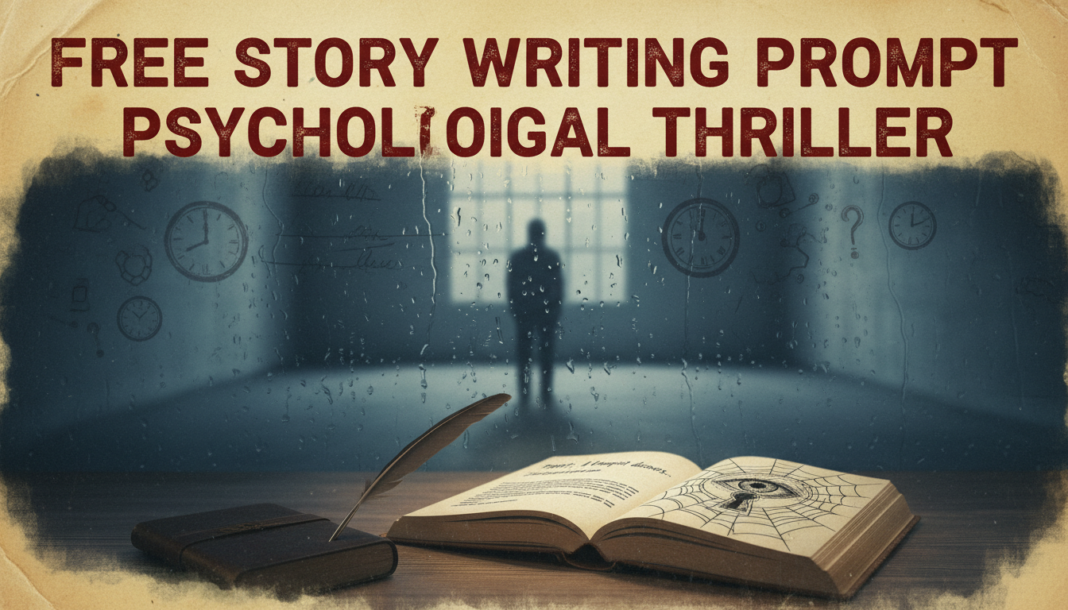
The air in Dr. Aris Thorne’s study was thick with the scent of old paper and unspoken fears. Outside, the rain lashed against the windows, a relentless percussion against his fragile composure. He traced the faded photograph on his desk – a woman, smiling, her eyes mirroring his own. But the smile felt alien, a phantom limb of happiness he could no longer recall. A tremor began deep within him, a low hum beneath his skin, echoing the subtle shift he’d felt in his perception for weeks. Was it grief, or something more insidious clawing at the edges of his mind? The reflection in the rain-streaked glass seemed to twist, a stranger’s face momentarily superimposed over his own, a silent scream caught in the glass.